International Business Machines (IBM) Unveils World’s First 0.7-Nanometer Semiconductor Tech
1 min readAnalysis by AlgoThesis Editorial Desk
Market Memory
What changed after the headline
The original read stays visible beside later evidence. Connections are editorial records, not ticker-only guesses.
Price since this story
Equal-weight basket · first close after publication
Price context does not establish that the story caused the move.
The story
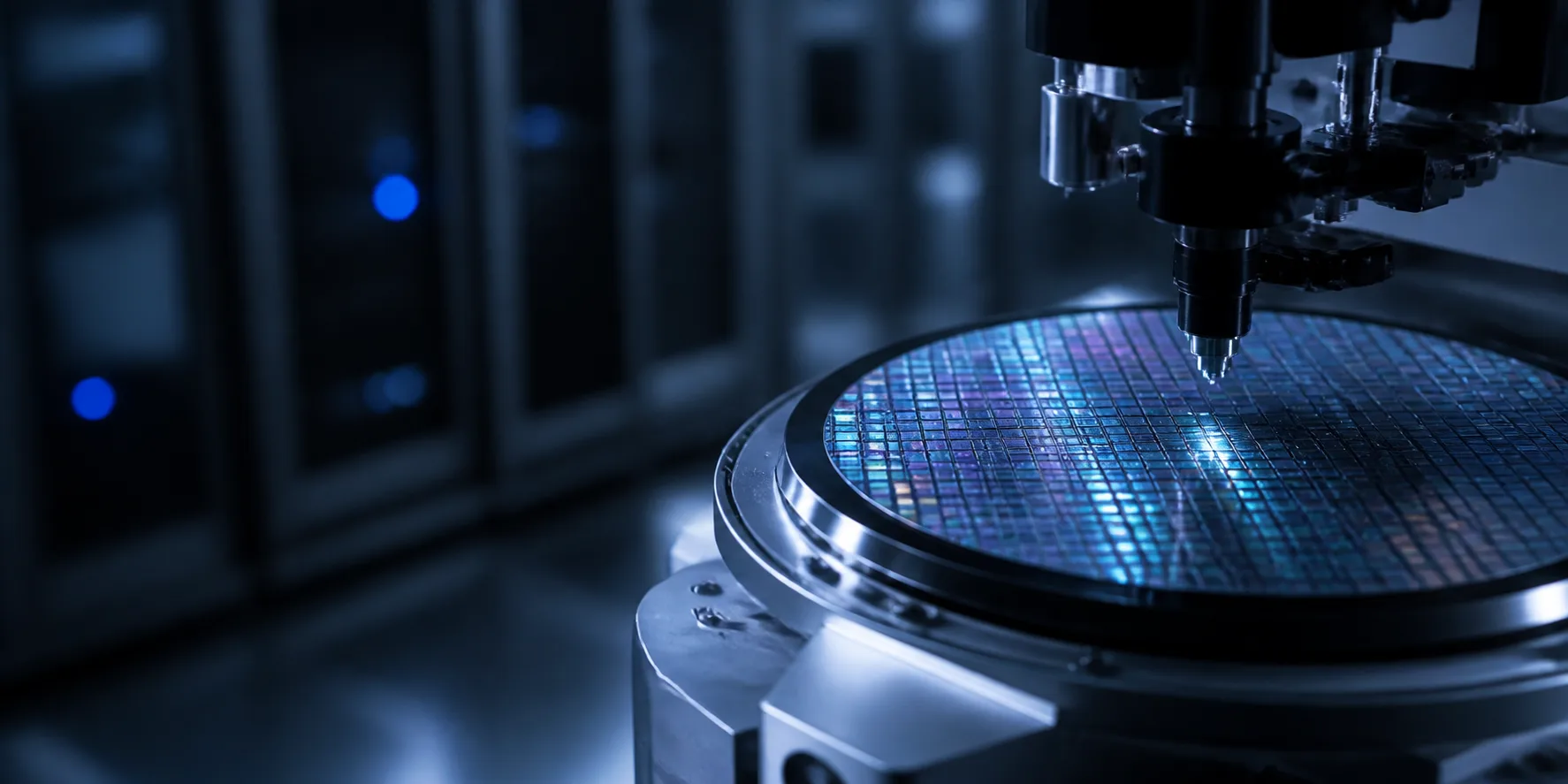
IBM unveiled what it claims is the world's first 0.7-nanometer semiconductor technology, a research-level advancement that would push chip density well beyond the current commercial frontier of 2nm and 3nm nodes held by TSMC and Samsung. The announcement positions IBM's research division as ahead of the physical scaling roadmap that most of the industry assumed was years away.
IBM enters this news from a base of $67.5B in revenue growing 7.6% year-over-year, with a 58.2% gross margin and $11.17 diluted EPS — solid fundamentals anchored in hybrid cloud and AI consulting rather than chip manufacturing. The semiconductor breakthrough, while headline-grabbing, does not map directly to IBM's current revenue streams, which makes the near-term earnings read ambiguous.
The key tension is commercialization versus research theater. IBM has a long history of semiconductor firsts — 2nm in 2021, 5nm before that — that it licenses or co-develops rather than manufactures at scale. If the 0.7nm announcement follows that pattern, the direct revenue impact on IBM is limited and the real beneficiaries could be TSMC, Samsung, or foundry partners who eventually manufacture the node.
The bull case rests on IBM parlaying this into high-margin IP licensing deals and an AI hardware narrative at a time when the market is hungry for compute density stories. The bear case is that IBM does not own a leading-edge fab, meaning the path from press release to product revenue is long, uncertain, and dependent on third-party manufacturers — leaving the stock move as sentiment-driven rather than fundamentals-driven.
What to watch: any follow-on disclosure of licensing partnerships, foundry agreements, or DARPA/government contracts tied to the node; also watch whether IBM management addresses commercialization timelines on the next earnings call.
The two-sided take
The house read
Two-sidedWrong ifA concrete licensing or foundry partnership announcement would validate the bull case and squeeze shorts quickly; conversely, a lack of follow-through details within days would deflate the pop.
Published read · research, not advice