Japan rate debate widens as BOJ weighs another increase on Friday
Japan’s central bank is weighing another rate increase on Friday as former architects of its easy-money policies increasingly split over how to confront inflation. The widening policy debate raises uncertainty around the path away from Japan’s long-running stimulus regime.
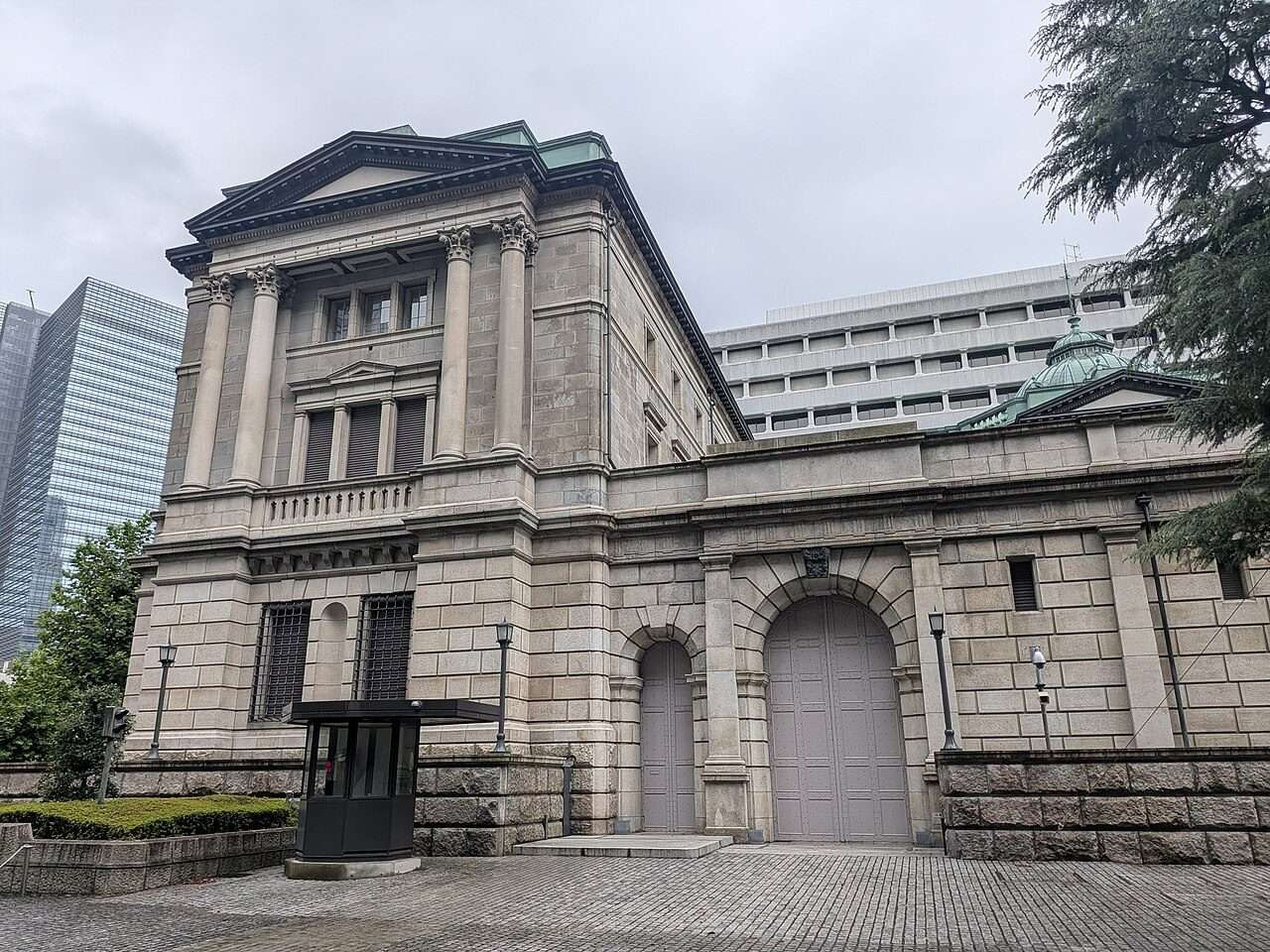 File photo · The Bank of Japan’s head office, Tokyo · Aug 2026 · Syced · CC0 · Source & license
The story
The New York Times reported that the Bank of Japan is considering another rate increase at its Friday meeting, while figures associated with Japan’s easy-money policies are changing their views.
Japan’s policy debate follows years in which the Bank of Japan relied on exceptionally accommodative settings to support growth and counter deflation.
The immediate mechanism runs through the Bank of Japan’s policy rate and its effect on borrowing costs, the yen and domestic demand. A Friday increase would affect Japanese banks, exporters and globally traded assets through rate differentials, while a decision to wait would preserve the existing policy stance and extend the debate over inflation management.
The next concrete point is the Bank of Japan’s Friday decision. The details to watch are whether rates rise, the guidance around further normalization and how policymakers characterize inflation risks; the article itself supplied no forecast, vote count or market estimate.
Our read · Tue, Sep 15
The widening BOJ split leaves Japan rates and yen exposure finely balanced ahead of Friday’s policy decision.
Why. The decision and its guidance on further normalization will determine whether the debate translates into a sustained rates and yen repricing.
Both cases
What could change this view: The trade read fails if Friday’s decision and guidance are too limited to resolve the policy divide, leaving markets to focus on unrelated global rate or currency drivers.
Who reported it · 1
Keep reading
Latest on the Wire
Trump threatens overseas AI data-centre ban for US firmsBitcoin drops below $59,000 as cash rush revives summer-low testGreer says US chip curbs will close China export-control loopholesBlackRock bitcoin ETF posts $541.1 million outflow as tech sell-off spreadsPoland says Russian missiles and drone crashed during Ukraine assaultContinue on the Wire →Latest on the Wire
BlackRock bitcoin ETF posts $541.1 million outflow as tech sell-off spreadsPoland says Russian missiles and drone crashed during Ukraine assaultUS MATCH Act puts ASML at center of China chip export disputeBeijing plans to bar young red-chip firms from overseas listingsContinue on the Wire →Top this week
Nvidia allies lobby board to bring back Jensen Huang as CEONvidia chair rules out Huang return as CEO after 75% sales outlookAnthropic Said to Guide IPO Pricing Above Market RangeNvidia interim CEO Colette Kress faces first earnings test after HuangAnthropic IPO could become the largest in US history on ThursdayAbout this report
Reported by NYT Business as Architects of Japan’s Easy-Money Policies Are Changing Their Minds
, . Who answers for this
The only report in this record. Closes are licensed end-of-day data from Databento; the move after a story is its first close against the close before it. How this is decided →
Kept as written · your side, if you take one, is graded privately against licensed closes after 10 trading days · nothing here is advice · How the Wire is made →