Bessent says Treasury yields will fall despite bond-market rebuke
Treasury Secretary Scott Bessent said he cannot control the bond market but expects U.S. yields to decline over time. His comments frame the recent rise in borrowing costs as a market challenge the administration cannot directly override.
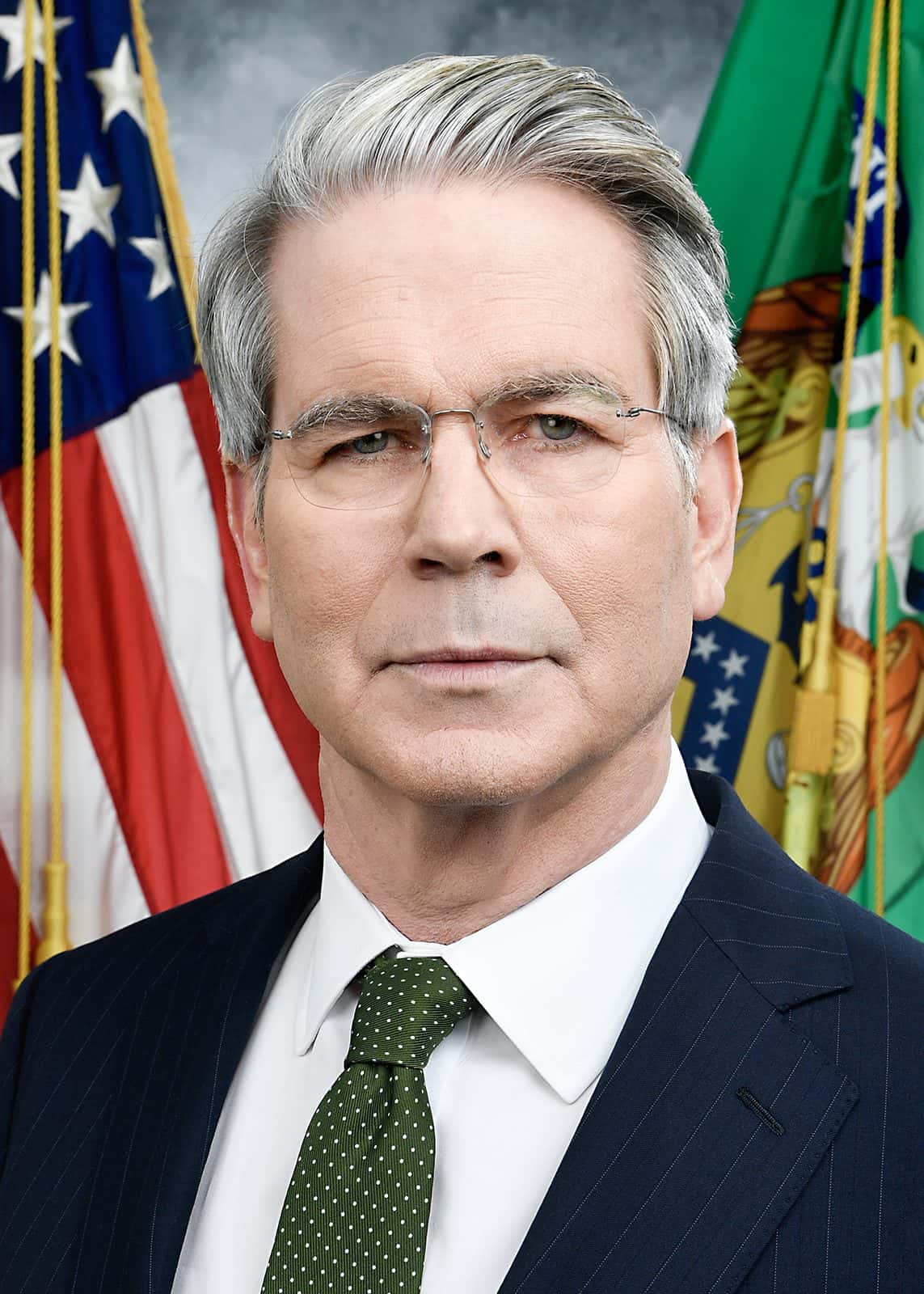 File photo · Feb 6, 2025 · U.S. Department of the Treasury · Public domain · Source & license
The story
In an interview with Axios, Treasury Secretary Scott Bessent acknowledged that the Treasury cannot dictate the path of the bond market. He argued that U.S. bond yields would eventually come back down, despite the market’s recent pushback against government policy and borrowing demands.
The remarks follow a period in which higher Treasury yields have become a visible constraint on policymakers and a source of concern across financial markets. Bessent’s language recognizes that fiscal and monetary expectations are being priced by investors rather than set unilaterally by the administration.
The immediate watchpoints are the next Treasury auctions, incoming inflation and employment data, and Federal Reserve decisions that could alter expectations for future interest rates. Those events will determine whether the market accepts Bessent’s longer-term view or continues to demand higher yields.
Our read · Sun, Oct 4
Bessent told Axios he cannot control the Treasury market but expects U.S. bond yields to fall over time.
Why. The implication is a gap between Treasury’s preferred borrowing conditions and the market’s independent pricing of fiscal and inflation risk. September Fed minutes on Oct. 7 are the next dated test of the rate path, with subsequent Treasury auctions and economic data determining whether yields validate Bessent’s longer-term view.
Both cases
What could change this view: A renewed rise in inflation expectations, weak Treasury auction demand, or Fed minutes signaling tighter policy would keep yields elevated.
Who reported it · 1
Keep reading
Latest on the Wire
Trump threatens overseas AI data-centre ban for US firmsBitcoin drops below $59,000 as cash rush revives summer-low testGreer says US chip curbs will close China export-control loopholesBlackRock bitcoin ETF posts $541.1 million outflow as tech sell-off spreadsPoland says Russian missiles and drone crashed during Ukraine assaultContinue on the Wire →Latest on the Wire
BlackRock bitcoin ETF posts $541.1 million outflow as tech sell-off spreadsPoland says Russian missiles and drone crashed during Ukraine assaultUS MATCH Act puts ASML at center of China chip export disputeBeijing plans to bar young red-chip firms from overseas listingsContinue on the Wire →Top this week
Nvidia allies lobby board to bring back Jensen Huang as CEONvidia chair rules out Huang return as CEO after 75% sales outlookAnthropic Said to Guide IPO Pricing Above Market RangeNvidia interim CEO Colette Kress faces first earnings test after HuangAnthropic IPO could become the largest in US history on ThursdayAbout this report
Reported by NYT Business as Rebuked by Bond Market, Bessent Says ‘House’ Does Not Always Win
, . Who answers for this
The only report in this record. Closes are licensed end-of-day data from Databento; the move after a story is its first close against the close before it. How this is decided →
Kept as written · your side, if you take one, is graded privately against licensed closes after 10 trading days · nothing here is advice · How the Wire is made →