Rising Treasury bill issuance is putting pressure on short-term rates, according to the Financial Times. The move could complicate the Federal Reserve’s effort to manage liquidity while stress at the long end of the US yield curve spreads toward short-term lending markets.
The story
Treasury bill issuance is adding pressure to short-term rates as strains in the US Treasury market appear to extend beyond longer-dated maturities. The Financial Times reported that the shift is reaching short-term lending markets, where it could affect funding conditions watched closely by the Federal Reserve.
The development follows stress at the long end of the US yield curve, with the latest move indicating that pressure is no longer confined to longer-term government debt. The immediate focus is how bill supply interacts with short-term borrowing and money-market conditions.
The mechanism runs through the supply of Treasury bills and the short-term funding market: heavier issuance can alter the balance of safe assets and cash available to financial institutions. That creates a more complicated setting for the Fed as it manages rates and liquidity.
The report describes the shift as an apparent movement toward short-term markets rather than a settled change in the Fed’s policy path. The scale and persistence of the pressure, along with its effect on broader funding conditions, remain open questions.
The next markers are short-term rate movements, Treasury issuance plans and the Fed’s response to funding-market conditions. Any sustained widening between policy settings and market borrowing rates would clarify whether the pressure is becoming a broader liquidity issue.
Our take
1 / 6
Our read · Oct 13
Treasury bill issuance is pressuring short-term rates as yield-curve stress reaches US lending markets.
Why
The pressure creates a potential mismatch between the Fed’s policy rate framework and borrowing costs set in short-term markets, making liquidity conditions more important to the next rates decision. The key variable is whether bill supply produces a persistent funding-market distortion or remains contained within Treasury-market trading.
What could change this view
The setup weakens if short-term rates stabilize despite continued bill issuance and the pressure remains limited to the long end of the curve.
▲ The case it holds
A sustained move into short-term lending markets could force greater attention to liquidity conditions and increase the market impact of the Fed’s next policy communication.
▼ The case it breaks
The evidence remains limited to an apparent transmission of long-end stress, and pressure from bill issuance may prove temporary without a broader funding-market disruption.
Source: Financial Times · Published here TUE, OCT 13 · 12:30 AM ET · the only report in this record · How this is decided →
Photo: File photo · The US Treasury Building, Washington · date unknown · Carol M. Highsmith / Library of Congress · Public domain · Source & license
Kept as written · your side, if you take one, is graded privately against licensed closes after 10 trading days · reaction = the first close after a story against the close before it · nothing here is advice · How the Wire is made →
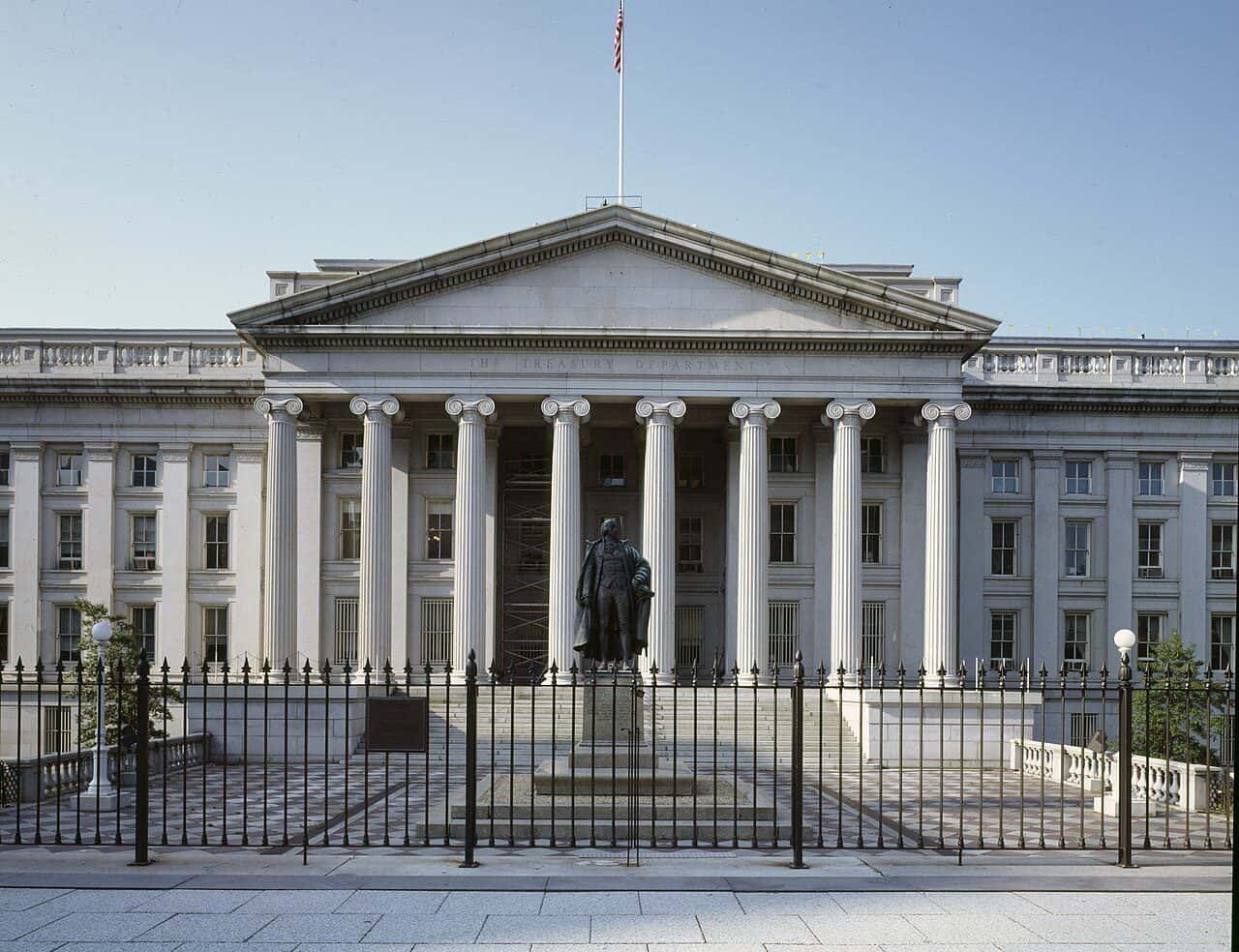 Photo credit ↓