New York Fed President John Williams expects one more Federal Reserve rate hike in 2026 but none in 2027 as inflation pressures ease. That outlook conflicts with traders’ expectations and sets up a policy-path repricing around incoming inflation and labor data.
The story
Speaking about the Federal Reserve’s rate path, New York Fed President John Williams said he sees one further hike in 2026, followed by no additional increase in 2027. His view is based on an expectation that inflation pressures will ease.
The stance differs from the path priced by traders, creating a gap between an influential policymaker’s outlook and market expectations. The key change is the absence of a further 2027 increase after the one move Williams anticipates in 2026.
The immediate mechanism runs through interest-rate expectations: Williams’ projection points to a less aggressive 2027 policy path than traders anticipate. That affects the interpretation of future inflation and employment data, which will determine whether the projected easing in inflation pressures develops.
The outlook remains conditional on inflation pressures easing, and the disagreement with traders leaves the policy path unsettled. The next evidence will come from incoming inflation and labor-market readings and from further Federal Reserve communication.
The next dated event that would settle the divergence is the Federal Reserve’s 2026 policy decision schedule; no specific meeting date is established here.
Our take
1 / 6
Our read · Oct 13
John Williams sees one more Fed hike in 2026 but none in 2027 as inflation pressures ease.
Why
The gap between Williams’ path and traders’ expectations makes incoming inflation data the deciding mechanism for rates, with a less aggressive 2027 outlook on one side and market pricing on the other. The evidence supports a policy-path repricing setup, but no single-name equity or dated forward catalyst is established for a directional trade.
What could change this view
A reacceleration in inflation pressures or stronger labor data could support traders’ expectation of additional 2027 hikes and invalidate Williams’ projected pause.
▲ The case it holds
Easing inflation pressures would support Williams’ view of one final 2026 hike followed by no increase in 2027.
▼ The case it breaks
Traders’ opposing outlook would gain ground if inflation pressures fail to ease, leaving room for additional 2027 tightening.
Source: CNBC · Published here TUE, OCT 13 · 3:46 PM ET · the only report in this record · How this is decided →
Photo: File photo · The Federal Reserve’s Eccles Building, Washington · Mar 2011 · Federal Reserve · Public domain · Source & license
Kept as written · your side, if you take one, is graded privately against licensed closes after 10 trading days · reaction = the first close after a story against the close before it · nothing here is advice · How the Wire is made →
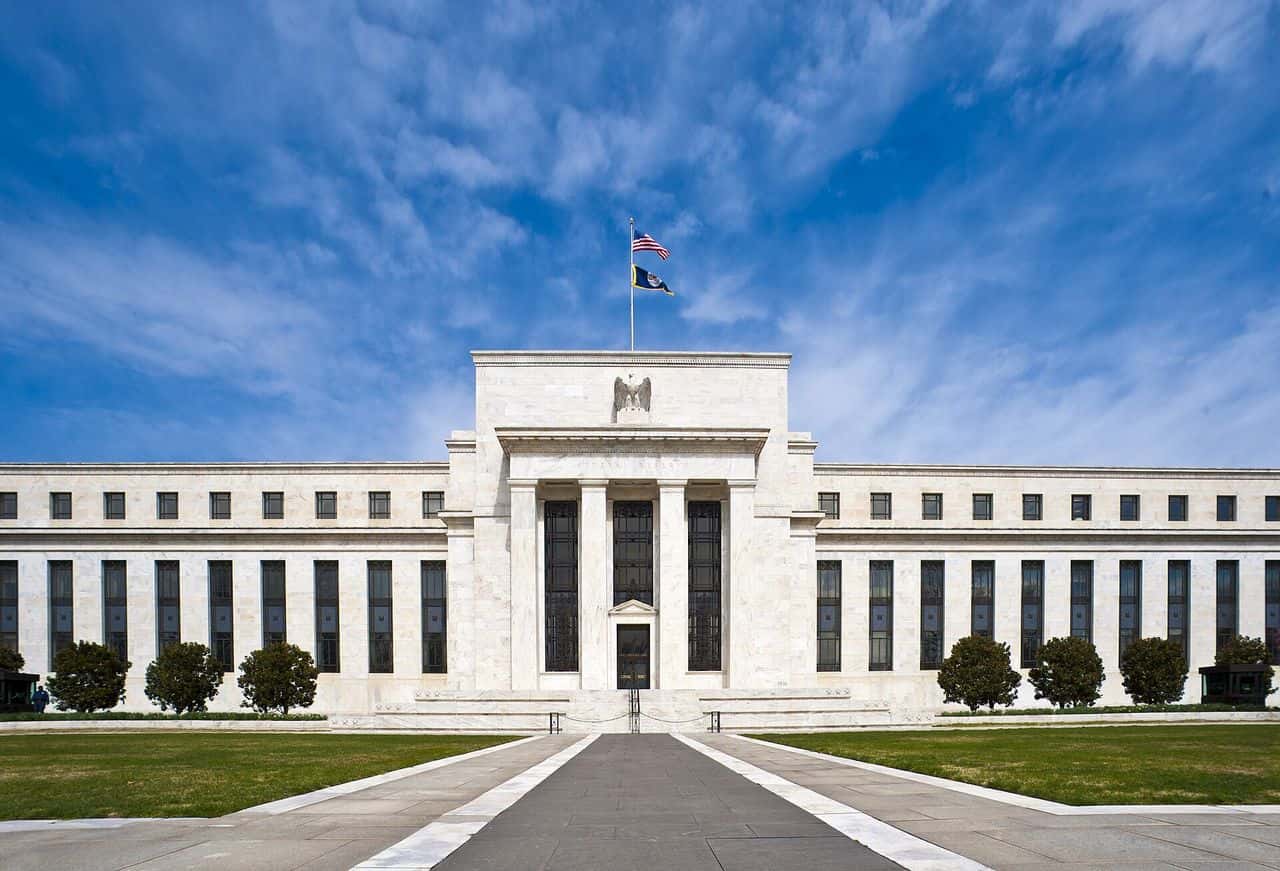 Photo credit ↓