Fed's Kevin Warsh warns inflation is too high, sparking bets rate hikes are coming
Fed Chair Kevin Warsh said inflation remains too high and reaffirmed his focus on bringing it down, prompting markets to price a greater chance of future rate hikes.
In a major speech, Federal Reserve Chair Kevin Warsh reiterated that inflation is still too high and that fighting price pressures remains a central priority. His remarks were interpreted as more hawkish than markets had expected, leading to bets that the Fed could raise interest rates in a future meeting. Warsh did not, however, explicitly lay out a timetable or a sequence of rate increases.
The speech comes against a backdrop in which investors had been focused on the possibility that the Fed would eventually ease policy, making any renewed discussion of hikes a meaningful shift in expectations. The reported market reaction reflects a change in perceived policy risk rather than a confirmed decision by the Federal Open Market Committee. No rate increase was announced in the remarks.
The clearest direct link is to interest-rate markets, where expectations for the Fed's next moves can affect Treasury yields and the value of the dollar. Higher expected rates can also alter financing costs for companies and households, while changing the discount rate applied to financial assets.
The evidence for a sustained tightening cycle remains incomplete. The market bets therefore represent an interpretation of the speech, not a formal policy commitment.
The next decisive information will be the Fed's future policy communications and inflation data. Investors will need to see whether subsequent statements repeat Warsh's warning and whether inflation remains high enough to justify moving from rhetoric to an actual rate decision. Until then, the open issue is how much of the repricing reflects durable policy risk versus an immediate reaction to one speech.
The speech shifts macro risk toward higher-for-longer rates, but without a named equity beneficiary or a defined hiking path the evidence does not support a single-name trade.
The immediate consequence is a higher perceived risk of restrictive policy, but the speech supplied no timetable and no confirmed rate decision. The read remains two-sided until subsequent Fed communication and inflation data establish whether the market's hike bets are durable.
The setup fails if later inflation data cools or other Fed communication rejects the implication of an imminent hiking cycle.
CoverageSource: NPR · Published here TUE, SEP 1 · 5:19 AM ET · 29 reports · 16 publishers in this record · latest listed: Yahoo Finance · TUE, SEP 1 · 5:19 AM ET (reaction)How this is decided →
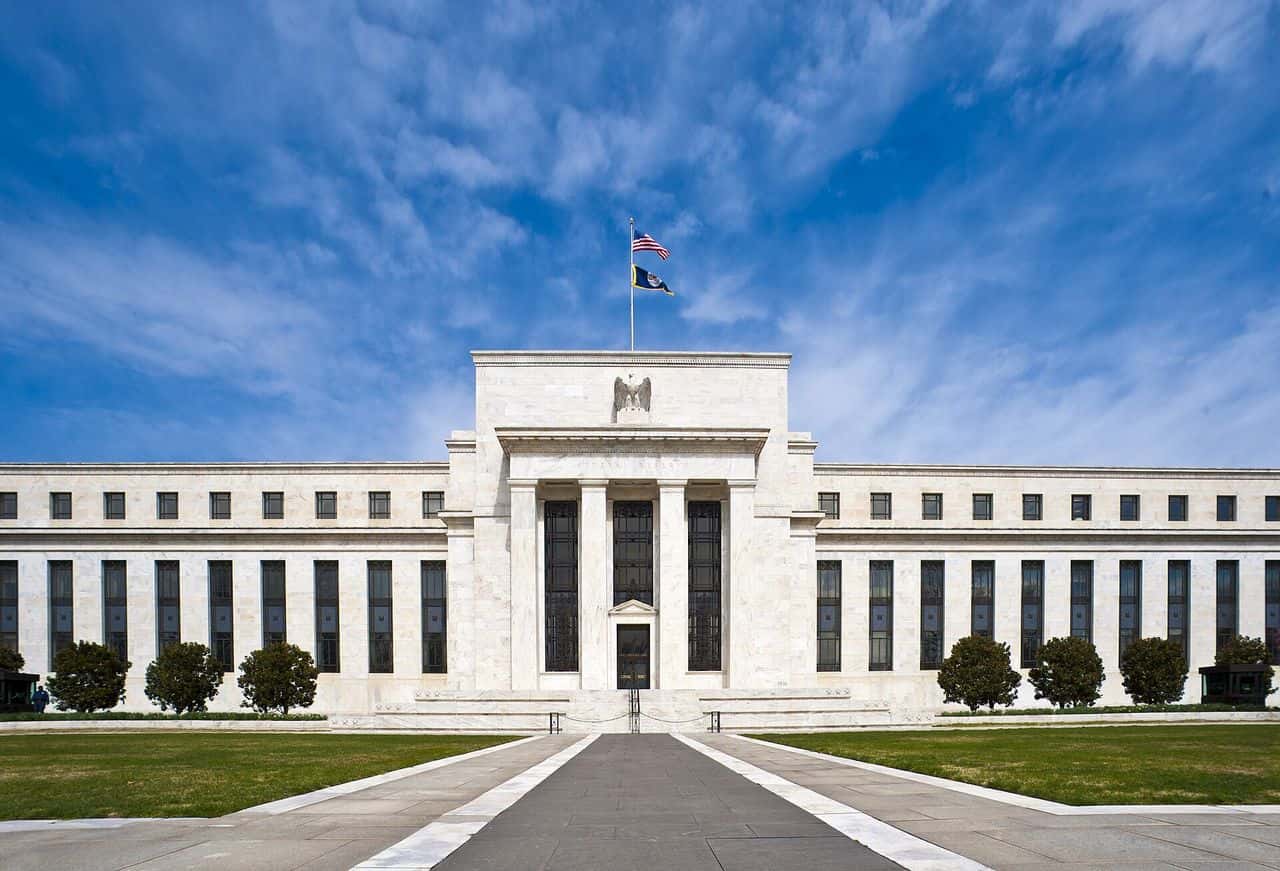 File photo · The Federal Reserve’s Eccles Building, Washington · Mar 2011 · Federal Reserve · Public domain · Source & license
- NYT Business — Investors Expect Higher Rates After Fed Chairman’s Inflation Pledge
- MarketWatch — U.S. stock futures flat as chances of rate hike rise after Warsh’s Jackson Hole comments
- Bloomberg.com — Bond Investors Wary After Warsh Fuels Wagers That Fed Is Poised to Hike
- Bloomberg.com — Gold Steadies After Tumbling as Warsh Spurs Fed Rate-Hike Bets
- Investing.com — Gold steadies after sharp selloff as Warsh revives Fed hike bets
- Investing.com — Asia chip stocks fall as Warsh revives rate-hike fears, oil adds risk-off pressure
- CNBC — Jackson Hole analyst roundup: Warsh's speech sends hike chances higher, may put Fed `at odds' with Treasury
- Investing.com — Asia stocks slip on growing Fed hike bets, fresh Middle East tensions
- CoinDesk — September Fed rate hike fears look overblown as the probability stands at just 58%, not 90%
- Investing.com — Dollar near two-week high as Warsh boosts rate-hike bets; yen hovers near 160
- Investing.com — German yields hit multi-year highs after Warsh’s hawkish tone
- Investing.com — Warsh’s hawkish reframing puts two more Fed hikes in view: Barclays
- Reuters — Barclays sees two more Fed rate hikes this year after Warsh speech
- Investing.com — Wall Street futures fall as Middle East flare-up and 60% Fed hike odds
- Financial Times — Japan’s bonds and yen under pressure after Warsh’s Jackson Hole speech
- Yahoo Finance — Gold Falls as Hawkish Fed Outlook Keeps Yields Elevated
- Morningstar — Warsh Sounds Hawkish, but Will There Be a September Rate Hike in the US?
- Investing.com — Warsh Inflation Warning Revives Hike Odds Ahead of Weak Jobs Report
- Yahoo Finance — Fed Chairman Kevin Warsh triggered a new problem for stocks
- Bloomberg Television — Warsh Says Inflation Isn’t Slowing, Vows to Reach 2% Target
- Yahoo Finance — Fed Chair Warsh's Jackson Hole Debut: What He Said, and Didn't Say, About Rate Hikes
- Investing.com — Warsh Inflation Warning Revives Hike Odds Ahead of Weak Jobs Report
- Bloomberg Television — Investors Wary After Warsh Speech Fuels Rate-Hike Bets
- The Motley Fool — Fed Chair Warsh's Jackson Hole Debut: What He Said, and Didn't Say, About Rate Hikes
- Yahoo Finance — Fed Chairman Kevin Warsh warned about inflation — but that's not why long-term rates are surging: Chart of the Day
- Investing.com South Africa — Warsh Inflation Warning Revives Hike Odds Ahead of Weak Jobs Report
- CNBC — Markets see Warsh endorsing a rate hike in September. Not everyone is convinced
- Yahoo Finance — Stock market today: Dow, S&P 500, Nasdaq futures fall as inflation, Fed rate-hike fears persist
Earlier context and later coverage are dated relative to this report. Automatically linked reports may cover a broader event.
No later reports linked yet.
Follow this story to find new evidence in your Following desk.
A sustained inflation warning from Warsh could keep rate-hike expectations elevated and extend pressure on rate-sensitive assets.
The opposing case is that Warsh gave no clear policy path, so the market reaction may fade if later communications or inflation data do not validate imminent hikes.
Kept as written · your side, if you take one, is graded privately against licensed closes after 10 trading days · nothing here is advice · How the Wire is made →