Payrolls miss cuts Fed rate hike odds as Asian stocks rally and oil firms
A payrolls miss has reduced expectations for a Federal Reserve rate hike, while Asian equities rallied and oil prices firmed amid a stalemate over the Strait of Hormuz. The setup shifts the macro balance toward lower-rate support for risk assets, but leaves energy and geopolitical inflation risks in tension.
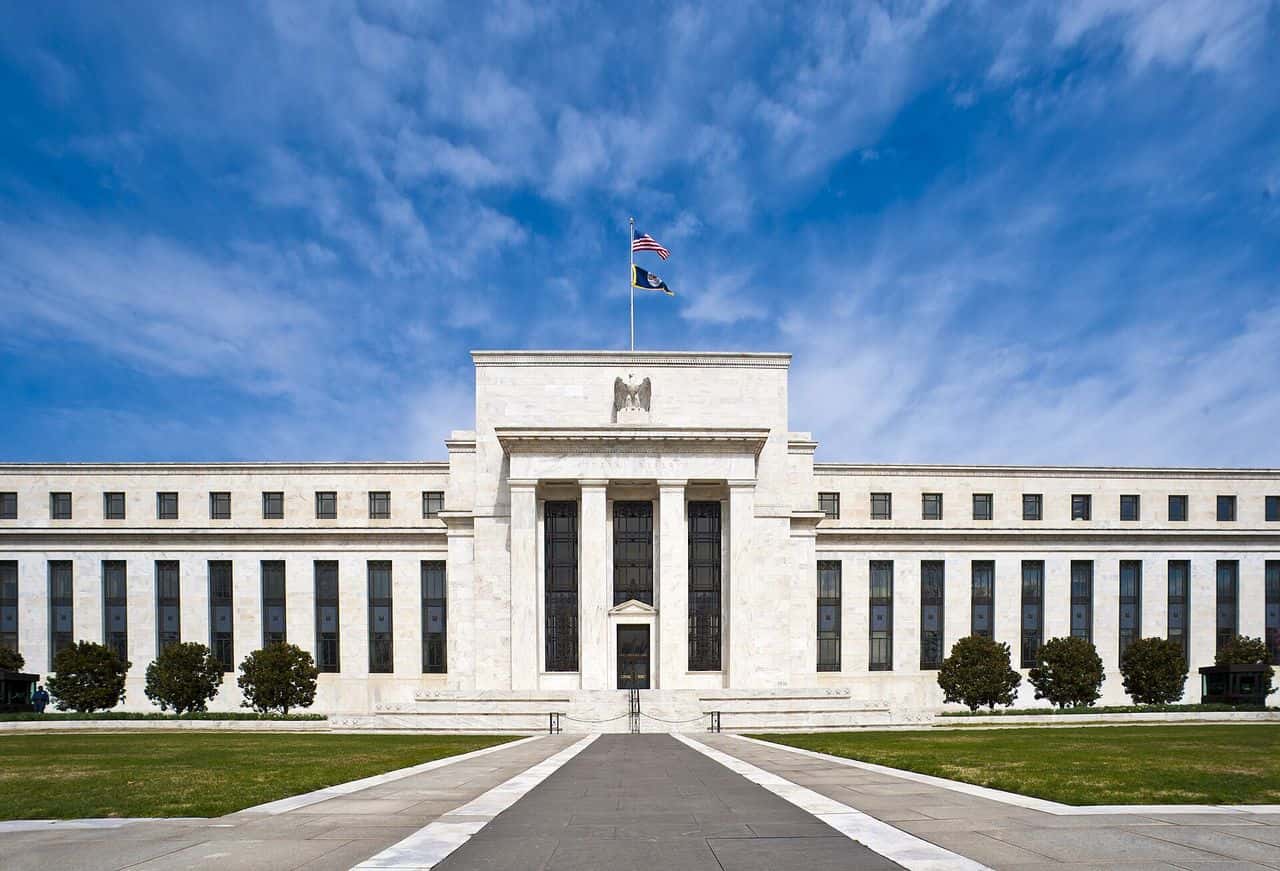 File photo · The Federal Reserve’s Eccles Building, Washington · Mar 2011 · Federal Reserve · Public domain · Source & license
The story
A weaker payrolls report has cut expectations for a Federal Reserve rate hike. Asian equities rallied as the rates outlook became less restrictive, while oil prices firmed as a stalemate over the Strait of Hormuz kept geopolitical supply concerns in focus.
The story links three market drivers: softer labor data, changing Fed expectations and a potential energy shock. Lower hike odds can support equity and bond sentiment, while firmer oil can raise inflation concerns and complicate the policy outlook.
The main tension is between rate relief for risk assets and a possible oil-driven inflation impulse.
The next catalysts are further labor and inflation data, any change in Fed communication, and developments around the Strait of Hormuz.
Our read · Mon, Aug 10
The payrolls miss shifts the macro read toward lower-rate support for risk assets, but firmer oil and the Hormuz stalemate keep the setup mixed rather than creating a single-name edge.
Why. The headline provides a clear macro tension: weaker payrolls reduce Fed hike odds, while firmer oil and the Hormuz stalemate preserve an inflationary risk. No ticker enrichment, company-specific data, or quantified market move is available to support a directional single-name trade.
Both cases
What could change this view: The read fails if subsequent inflation or Fed communication overwhelms the payrolls signal, or if the Hormuz stalemate resolves and oil retreats.
Who reported it · 2
Keep reading
Latest on the Wire
Bitcoin drops below $59,000 as cash rush revives summer-low testGreer says US chip curbs will close China export-control loopholesBlackRock bitcoin ETF posts $541.1 million outflow as tech sell-off spreadsPoland says Russian missiles and drone crashed during Ukraine assaultAnthropic debut fails to halt technology-led slide in US stocksContinue on the Wire →Latest on the Wire
Poland says Russian missiles and drone crashed during Ukraine assaultUS MATCH Act puts ASML at center of China chip export disputeBeijing plans to bar young red-chip firms from overseas listingsChina seeks protections to restart US private-equity investmentsContinue on the Wire →Top this week
Nvidia allies lobby board to bring back Jensen Huang as CEONvidia chair rules out Huang return as CEO after 75% sales outlookAnthropic Said to Guide IPO Pricing Above Market RangeNvidia interim CEO Colette Kress faces first earnings test after HuangAnthropic IPO could become the largest in US history on ThursdayAbout this report
Reported by Investing.com as Payrolls miss cuts Fed hike odds as Asia rallies and oil firms on Hormuz stalemate
, . Who answers for this
2 reports from 1 publisher in this record. Closes are licensed end-of-day data from Databento; the move after a story is its first close against the close before it. How this is decided →
Kept as written · your side, if you take one, is graded privately against licensed closes after 10 trading days · nothing here is advice · How the Wire is made →