Why TSMC’s CoWoS Role Keeps Taiwan Semiconductor (TSM) Central to the HBM-Driven AI Chip Boom
1 min readAnalysis by AlgoThesis Editorial Desk
Market Memory
What changed after the headline
The original read stays visible beside later evidence. Connections are editorial records, not ticker-only guesses.
Price since this story
Equal-weight basket · first close after publication
Price context does not establish that the story caused the move.
The story
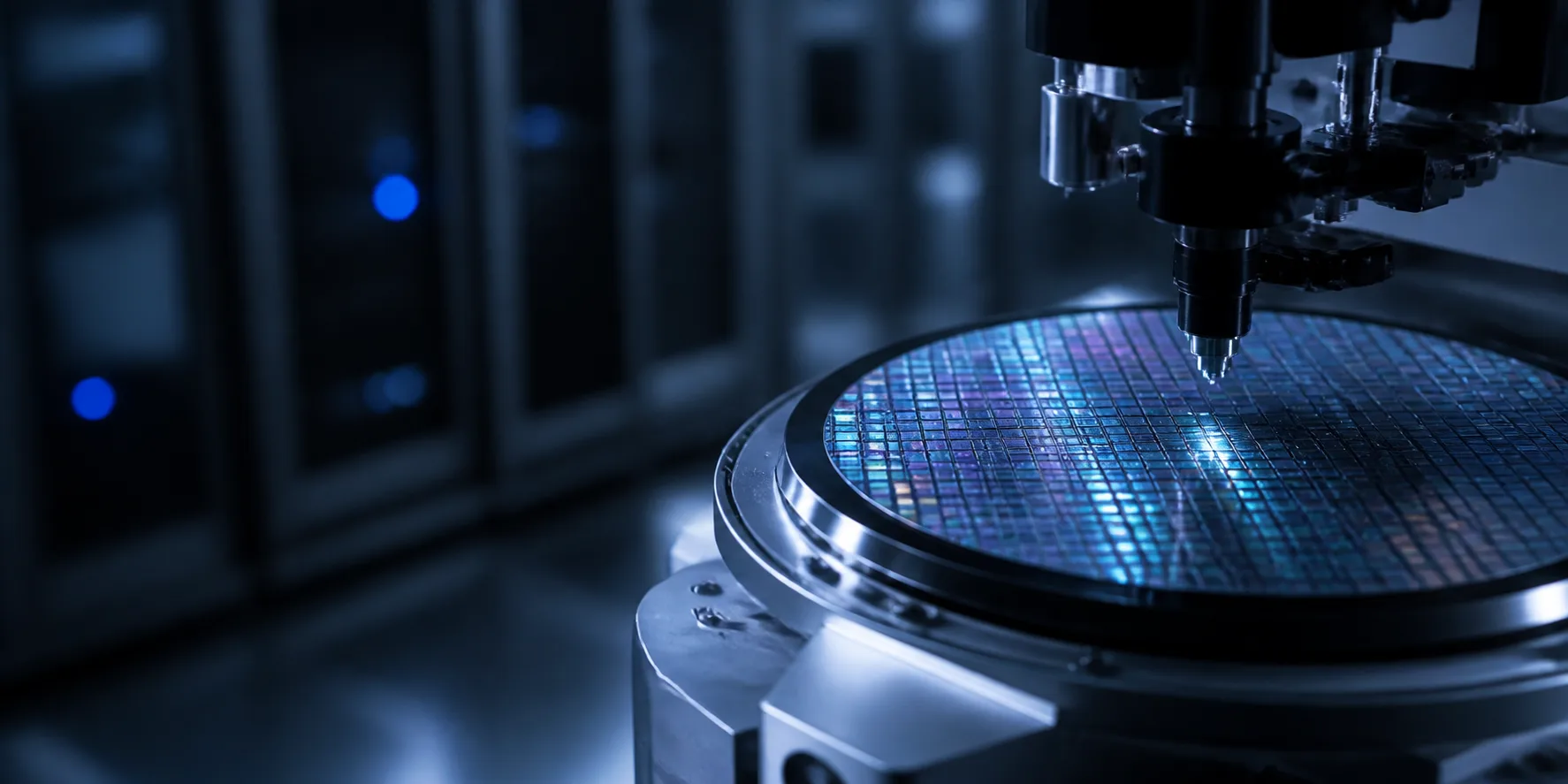
TSMC's CoWoS (Chip-on-Wafer-on-Substrate) packaging is the critical integration layer that binds High Bandwidth Memory stacks to advanced AI logic dies for NVIDIA, AMD, and others. There is currently no comparable alternative at scale, meaning nearly every high-end AI accelerator — from NVIDIA's H100/H200/B200 family to AMD's MI300X — runs through TSMC's CoWoS line. This structural chokepoint is a meaningful source of pricing power on top of an already-dominant foundry position.
The enrichment data underlines the financial strength: TSMC reported FY2024 revenue of ~$2.9 trillion NTD (+33.9% YoY), a 56.1% gross margin, 40.0% net margin, and $44.67 in diluted EPS. These are foundry metrics with a software-like margin profile, driven almost entirely by the AI compute buildout. The revenue acceleration is among the fastest in the company's history outside of a post-COVID restocking cycle.
The bull case rests on CoWoS capacity remaining undersupplied relative to AI accelerator demand through at least 2026 — TSMC has been expanding aggressively but lead times remain extended, and customers are locking in multi-year agreements. Every incremental dollar of HBM adoption flows through TSMC's packaging lines, creating compounding revenue density per wafer.
The bear case centers on concentration risk: Taiwan strait geopolitics, potential U.S. export controls tightening, and the theoretical (if distant) risk that Intel Foundry Services or Samsung Advanced Packaging closes the CoWoS gap. Customer concentration in NVIDIA also means any demand air pocket in AI capex directly pressures TSM's top line.
What to watch: TSMC's quarterly CoWoS capacity commentary, NVIDIA's next-generation Blackwell Ultra ramp timing, any Taiwan geopolitical escalation signals, and whether gross margins hold above 55% as advanced packaging mix shifts upward.
The two-sided take
The house read
Two-sidedWrong ifA meaningful slowdown in hyperscaler AI capex, a Taiwan Strait escalation, or U.S. export control tightening targeting advanced packaging exports would compress both revenue and the valuation multiple simultaneously — a double hit.
Published read · research, not advice