Fed Meeting Live Updates: Kevin Warsh to Address U.S. Economy as Fed Holds Interest Rates Steady
The Fed held rates steady but new projections show officials split between no cuts this year and one or more rate hikes, signaling a higher-for-longer pivot driven by persistent inflation fears. This hardens the rates-higher narrative and puts pressure on rate-sensitive equities, long-duration bonds, and risk assets broadly.
The Federal Reserve held rates steady at its latest meeting, but the updated dot plot reveals a hawkish tilt: policymakers are divided between standing pat all year and actually raising rates, a meaningful shift from earlier expectations of multiple cuts in 2025. Kevin Warsh, a prominent hawk, is set to address the economy, adding further weight to the tightening-bias narrative. The inflation outlook has deteriorated enough that the FOMC's central tendency now leans toward no easing this cycle.
The second-order setup is a repricing of the front end of the Treasury curve and a continued squeeze on rate-sensitive sectors — utilities, REITs, and long-duration tech. The key things to watch are: whether the 2-year yield breaks meaningfully above recent highs, how equity markets absorb the no-cut baseline, and whether Warsh's remarks hint at any formal role in future Fed leadership that could further anchor hawkish expectations.
With the Fed signaling a potential shift from cuts to hikes and Warsh on deck, the question for TLT, rate-sensitive sectors, and SPY is whether this dot-plot hawkishness is a one-meeting repricing or the start of a sustained higher-for-longer regime.
The Fed dot plot has pivoted from a cut-easing bias to a hold-or-hike stance, a material repricing signal for duration. TLT and rate-sensitive equity sectors (utilities, REITs) historically re-rate lower when the 2-year yield climbs on a hawkish dot-plot revision. The macro setup — higher-for-longer confirmed by official projections — is directionally clear for long-duration bonds.
A rapid softening in incoming inflation data (CPI, PCE) or a labor market shock could force a dovish pivot, squeezing shorts in TLT and lifting rate-sensitive sectors sharply.
CoverageSource: NYT Business · Published here WED, JUN 17 · 2:22 PM ET · the only report in this recordHow this is decided →
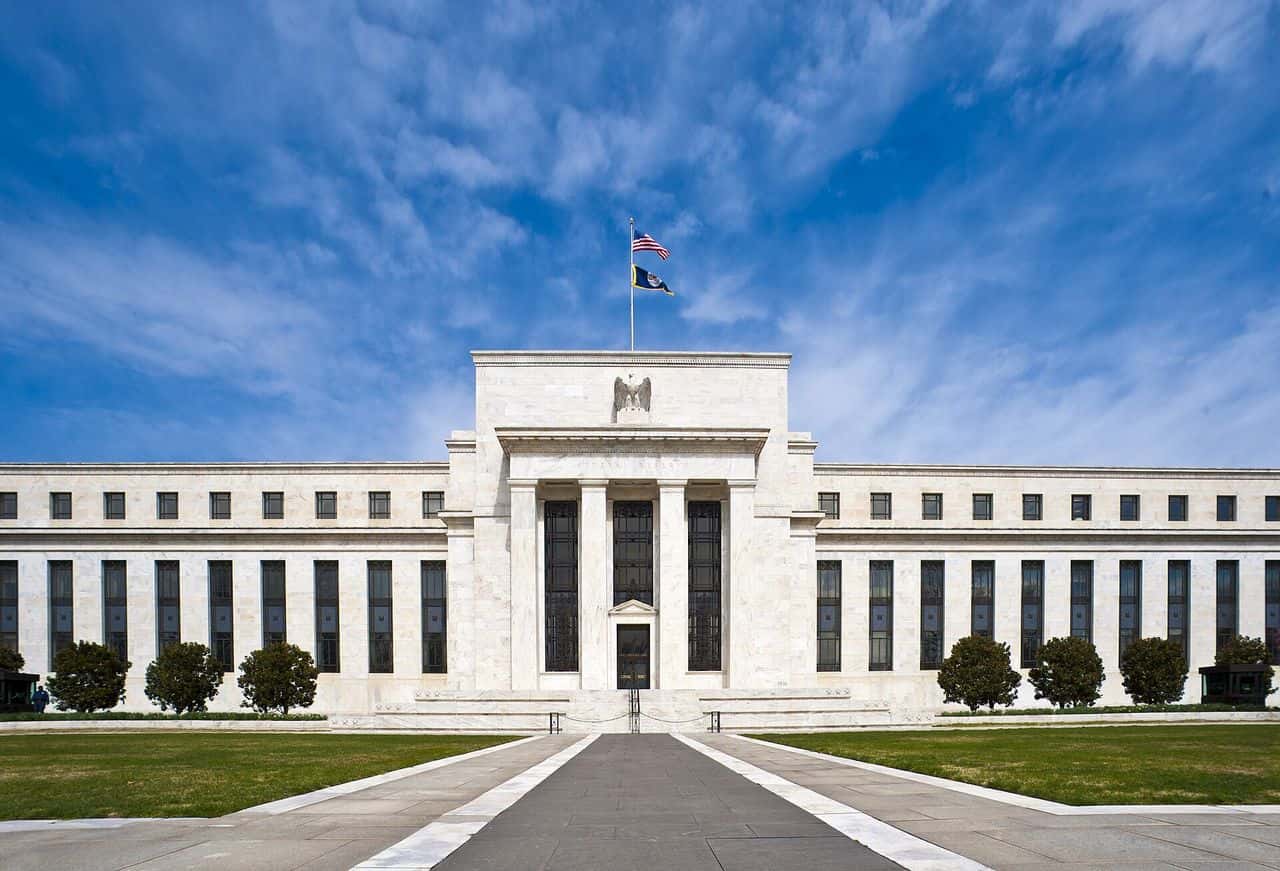 File photo · The Federal Reserve’s Eccles Building, Washington · Mar 2011 · Federal Reserve · Public domain · Source & license
Earlier context and later coverage are dated relative to this report. Automatically linked reports may cover a broader event.
No later reports linked yet.
Follow this story to find new evidence in your Following desk.
Price context does not establish that the story caused the move.
If inflation surprises to the downside in the next 1-2 prints, the market could front-run a return to the cut cycle, pushing TLT back toward recent highs and compressing the hawkish repricing quickly.
The dot plot now shows Fed officials openly debating rate hikes — not just a pause — which historically precedes sustained duration underperformance and further compression in rate-sensitive equity multiples.
Kept as written · your side, if you take one, is graded privately against licensed closes after 10 trading days · nothing here is advice · How the Wire is made →