Can US Consumers Afford Another Fed Rate Hike?
US consumers are cutting back as higher borrowing costs meet persistent supply-driven inflation, while markets price a nearly 73% chance of a rate hike next week. The setup puts household resilience and the Fed’s inflation response on the same policy path.
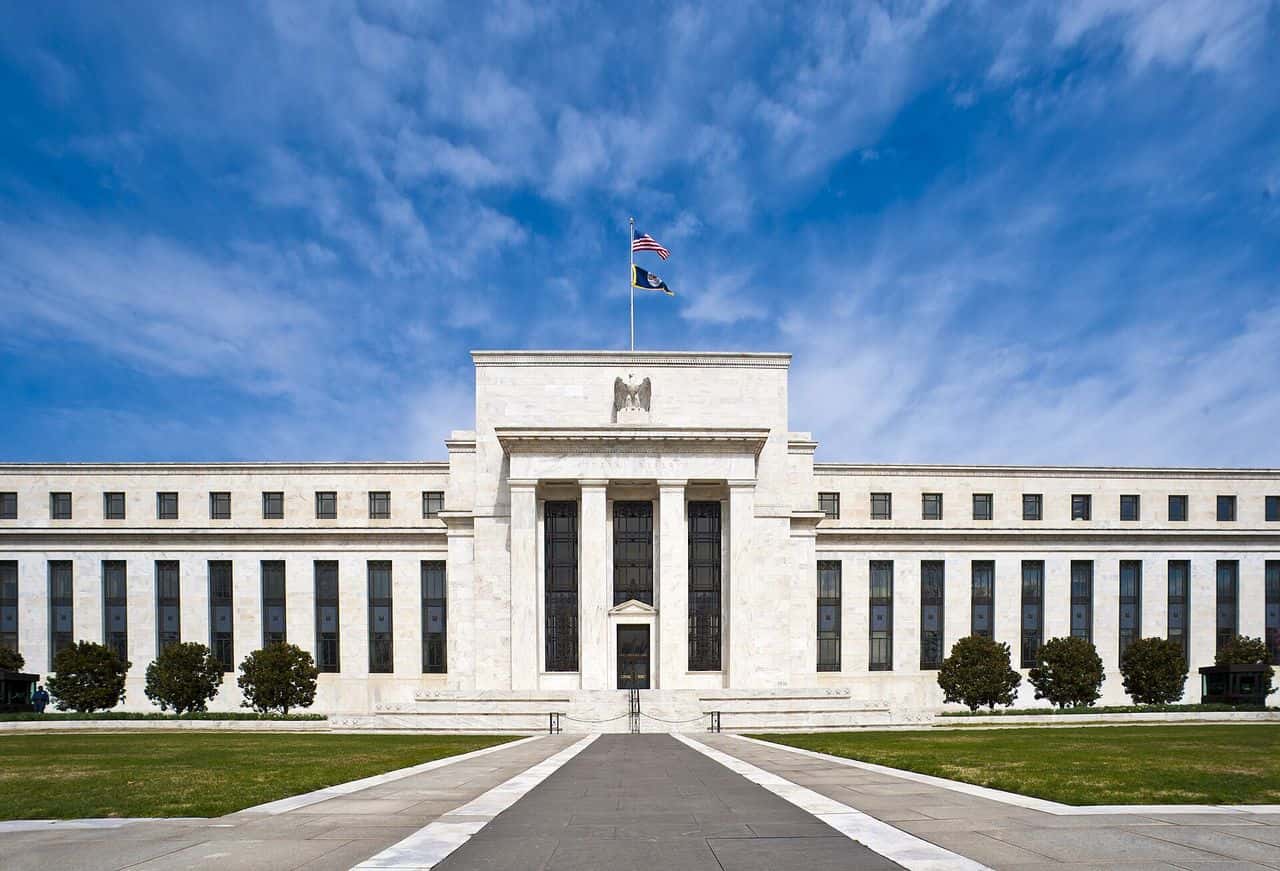 File photo · The Federal Reserve’s Eccles Building, Washington · Mar 2011 · Federal Reserve · Public domain · Source & license
The story
US consumers are cutting back as borrowing costs climb, according to Bloomberg Television, while supply shocks continue to fuel inflation. Markets are pricing in nearly a 73% chance of a Federal Reserve rate hike next week, making the decision the immediate test of how far policymakers are prepared to tighten into weaker household demand.
The tension is that higher rates can restrain spending and price pressure, but they also raise the cost of credit for households. The report frames the policy choice against a consumer already reducing expenditure, rather than against an economy showing uniformly strong demand.
The main transmission runs through household borrowing costs and consumption, with the Fed’s decision affecting the cost of mortgages, credit and other financing. Persistent supply shocks complicate that mechanism because rate policy can weaken demand but cannot directly remove the underlying supply constraints.
The policy outcome remains uncertain: markets assign a nearly 73% probability to a hike next week, not certainty, and the report poses the question of whether tighter policy can lower inflation without causing deeper household strain.
Next week’s Fed decision is the key event. The accompanying policy language and subsequent consumer and inflation data will determine whether markets read the move primarily as an inflation response or as an added constraint on household demand.
Our read · Mon, Sep 21
US consumers are cutting back as markets price a nearly 73% chance of a Fed rate hike next week.
Why. The policy trade-off is unusually direct: another hike could restrain demand, but it would also raise financing costs for households already cutting back while supply shocks continue to support inflation. With markets pricing a nearly 73% chance of a move next week, the decision and its guidance—not a single consumer signal—will determine whether the setup is read as disinflationary or as an additional household strain.
Both cases
What could change this view: The read breaks if the Fed holds rates or signals that supply-driven inflation does not warrant further tightening, or if consumer demand proves more resilient than the report suggests.
Who reported it · 1
Keep reading
Latest on the Wire
AMD shares fall 11% after Hunterbrook warns over China linksWalmart raises full-year outlook as e-commerce wins shoppersAnthropic IPO could become the largest in US history on ThursdayContinuing claims rise as Goldman sees Fed hikes in December and MarchPIF Tower in Riyadh reportedly damaged in second Houthi attackContinue on the Wire →Latest on the Wire
Trump Media buys back $100 million of notes ahead of Nov. 30 cash demandBiohaven reports confirmed BHV-1530 responses in two FGFR3 cancersTrump, Xi and Putin pledge more refined fuel after first trilateral summitSky reserve linked to $518 million in illicit activity, investigation findsContinue on the Wire →Top this week
Nvidia allies lobby board to bring back Jensen Huang as CEONvidia chair rules out Huang return as CEO after 75% sales outlookAnthropic Said to Guide IPO Pricing Above Market RangeNvidia interim CEO Colette Kress faces first earnings test after HuangNvidia CEO Jensen Huang reportedly resigns as US-China tensions riseAbout this report
Reported by Bloomberg Television, . Who answers for this
The only report in this record. Closes are licensed end-of-day data from Databento; the move after a story is its first close against the close before it. How this is decided →
Kept as written · your side, if you take one, is graded privately against licensed closes after 10 trading days · nothing here is advice · How the Wire is made →