Fed Faces Prospect of Another Interest Rate Increase Just Before Midterm Elections
Markets are assigning nearly 70 percent odds to another Federal Reserve interest-rate increase in late October, shortly before the U.S. midterm elections. That timing would put monetary policy, inflation and election-year politics on the same calendar.
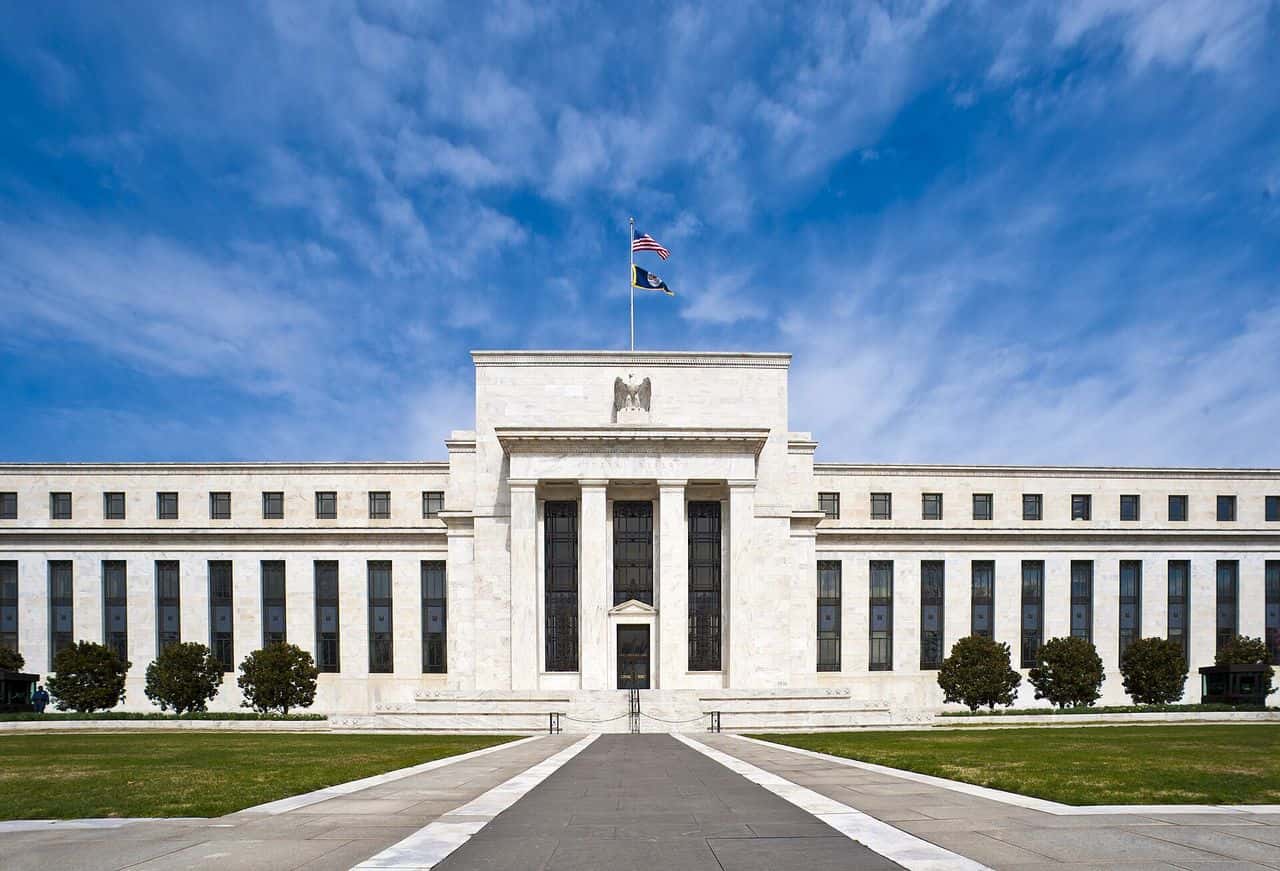 File photo · The Federal Reserve’s Eccles Building, Washington · Mar 2011 · Federal Reserve · Public domain · Source & license
The story
Financial markets are pricing nearly 70 percent odds of a Federal Reserve rate increase in late October, according to the New York Times. The potential move would come shortly before the U.S. midterm elections.
The timing would place a possible rate decision close to a major U.S. political event, making the central bank’s inflation response a more prominent election-season issue. The report identifies market expectations, rather than a confirmed policy decision.
The immediate mechanism runs through the Federal Reserve’s policy rate, borrowing costs and financial-market pricing. No single company is identified as the subject of the story.
The key uncertainty is whether incoming economic data and Fed officials’ views support the market-implied probability. The next policy decision and the data released before late October should determine whether that expectation holds.
Our read · Fri, Sep 25
Markets price nearly 70 percent odds of a Federal Reserve rate increase in late October.
Why. The setup is a policy-path repricing rather than a single-company read: a late-October hike would arrive just before the midterm elections and transmit through rates, financing costs and asset valuations. With no company-specific exposure identified, the evidence supports monitoring the market-implied probability into the decision rather than a single-name directional call.
Both cases
What could change this view: Incoming inflation or labor data, or a change in Fed communication, could reduce the nearly 70 percent market-implied probability before the late-October decision.
Who reported it · 1
Keep reading
Latest on the Wire
AMD shares fall 11% after Hunterbrook warns over China linksWalmart raises full-year outlook as e-commerce wins shoppersAnthropic IPO could become the largest in US history on ThursdayContinuing claims rise as Goldman sees Fed hikes in December and MarchPIF Tower in Riyadh reportedly damaged in second Houthi attackContinue on the Wire →Latest on the Wire
Trump Media buys back $100 million of notes ahead of Nov. 30 cash demandBiohaven reports confirmed BHV-1530 responses in two FGFR3 cancersTrump, Xi and Putin pledge more refined fuel after first trilateral summitSky reserve linked to $518 million in illicit activity, investigation findsContinue on the Wire →Top this week
Nvidia allies lobby board to bring back Jensen Huang as CEONvidia chair rules out Huang return as CEO after 75% sales outlookAnthropic Said to Guide IPO Pricing Above Market RangeNvidia interim CEO Colette Kress faces first earnings test after HuangNvidia CEO Jensen Huang reportedly resigns as US-China tensions riseAbout this report
Reported by NYT Business, . Who answers for this
The only report in this record. Closes are licensed end-of-day data from Databento; the move after a story is its first close against the close before it. How this is decided →
Kept as written · your side, if you take one, is graded privately against licensed closes after 10 trading days · nothing here is advice · How the Wire is made →