Latin American markets fall after Fed raises interest rates
Latin American markets fell after the Federal Reserve raised interest rates, according to Investing.com. The move creates a tougher backdrop for regional assets through tighter global financial conditions and potentially stronger pressure on local currencies.
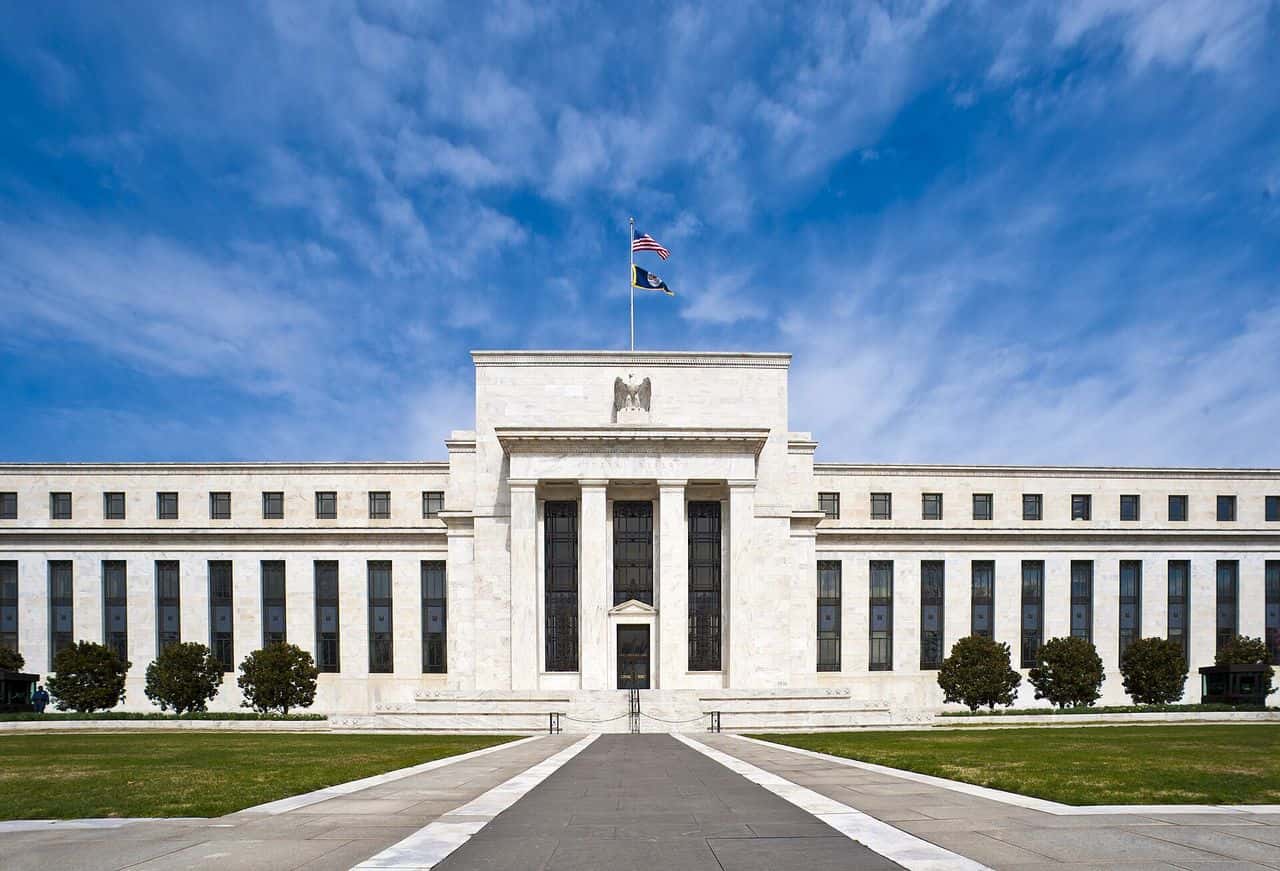 File photo · The Federal Reserve’s Eccles Building, Washington · Mar 2011 · Federal Reserve · Public domain · Source & license
The story
Investing.com reported that Latin American markets fell after the Federal Reserve raised interest rates.
The immediate market link is tighter US monetary policy: higher US rates can raise the relative appeal of dollar assets and increase financing pressure across emerging markets.
No single company is identified, and no company-specific revenue, cost, contract or regulatory mechanism is established by the report. The setup therefore concerns regional asset prices, currencies and rates rather than an identifiable corporate issuer.
Those omissions leave the magnitude and persistence of the reaction unresolved.
The next useful markers are the Fed's subsequent communications and upcoming US inflation, labor-market and policy data, alongside statements or decisions from Latin American central banks. The direction of currencies, sovereign yields and equity indices after those events would show whether the initial reaction was a short-lived adjustment or a broader repricing.
Our read · Wed, Sep 16
The Fed hike raises pressure on Latin American currencies and risk assets, but the report supports no single-name equity read.
Why. The implication is a tighter external-financing backdrop for Latin American assets. The lack of a named company and forward event keeps the read at the regional macro level rather than a single-name equity call.
Both cases
What could change this view: The initial decline could reverse if subsequent Fed communication is less hawkish or if local central banks offset the external tightening pressure.
Who reported it · 2
Keep reading
Latest on the Wire
Australia’s jobless rate hits 5-year high, markets ramp up rate-cut bets for 2027Trump meets Putin and Xi separately ahead of historic three-way talksHyperscale Data warns of $74.8 million gap for Michigan AI projectAlibaba aided China military-linked lab with AI computing technologyMeta pauses plan to give Zuckerberg new shares without losing controlContinue on the Wire →Latest on the Wire
Hyperscale Data warns of $74.8 million gap for Michigan AI projectAlibaba aided China military-linked lab with AI computing technologyMeta pauses plan to give Zuckerberg new shares without losing controlAnthropic Said to Guide IPO Pricing Above Market RangeContinue on the Wire →Top this week
Nvidia allies lobby board to bring back Jensen Huang as CEONvidia chair rules out Huang return as CEO after 75% sales outlookNvidia interim CEO Colette Kress faces first earnings test after HuangNvidia CEO Jensen Huang reportedly resigns as US-China tensions riseNvidia CFO Colette Kress to serve as interim CEO after Jensen HuangAbout this report
Reported by Investing.com, . Who answers for this
2 reports from 2 publishers in this record. Closes are licensed end-of-day data from Databento; the move after a story is its first close against the close before it. How this is decided →
Kept as written · your side, if you take one, is graded privately against licensed closes after 10 trading days · nothing here is advice · How the Wire is made →