Nvidia Says Memory Pricing Has Turned ‘Extreme’ and Is ‘Headed Even Higher Into Next Year,’ But Its Own Price Increases Are Already Executed
Nvidia says memory pricing has become extreme and could rise further into next year, while the company’s own price increases have already been implemented. That creates a mixed setup: higher memory costs threaten margins, but executed pricing actions provide an offset whose strength will be tested in future results.
Nvidia warned that memory pricing has reached "extreme" levels and is headed higher into next year, while saying its own price increases have already been executed. The company reported FY2026 revenue of $215.9B, up 65.5% year over year, with a 71.1% gross margin and 55.6% net margin; those are annual figures and should not be treated as the current quarter's results.
For NVDA, the mechanism is direct: memory is a component cost in its systems, while higher selling prices are the offset. The ability to preserve the reported gross-margin profile will depend on how quickly memory costs rise, how much of that increase reaches customers, and whether pricing actions affect demand or mix.
The next decisive evidence is Nvidia's next earnings release or guidance update. Key items are the reported gross margin, forward margin commentary, and any quantified disclosure on memory costs, pricing, or supply conditions.
The memory-cost warning is mixed for NVDA: executed price increases offer an offset, but sustained input inflation puts its 71.1% gross-margin profile at risk.
The setup is balanced because Nvidia has already implemented price increases. The main decision point is the next disclosed gross margin and forward cost commentary; the FY2026 enrichment shows a 71.1% gross margin, but it is an older annual reference rather than current-quarter evidence.
The read fails if Nvidia quantifies a full offset from pricing, or if memory costs rise enough to pressure gross margin without a corresponding demand or pricing hit.
CoverageSource: Yahoo Finance · Published here SAT, SEP 5 · 10:00 AM ET · the only report in this recordHow this is decided →
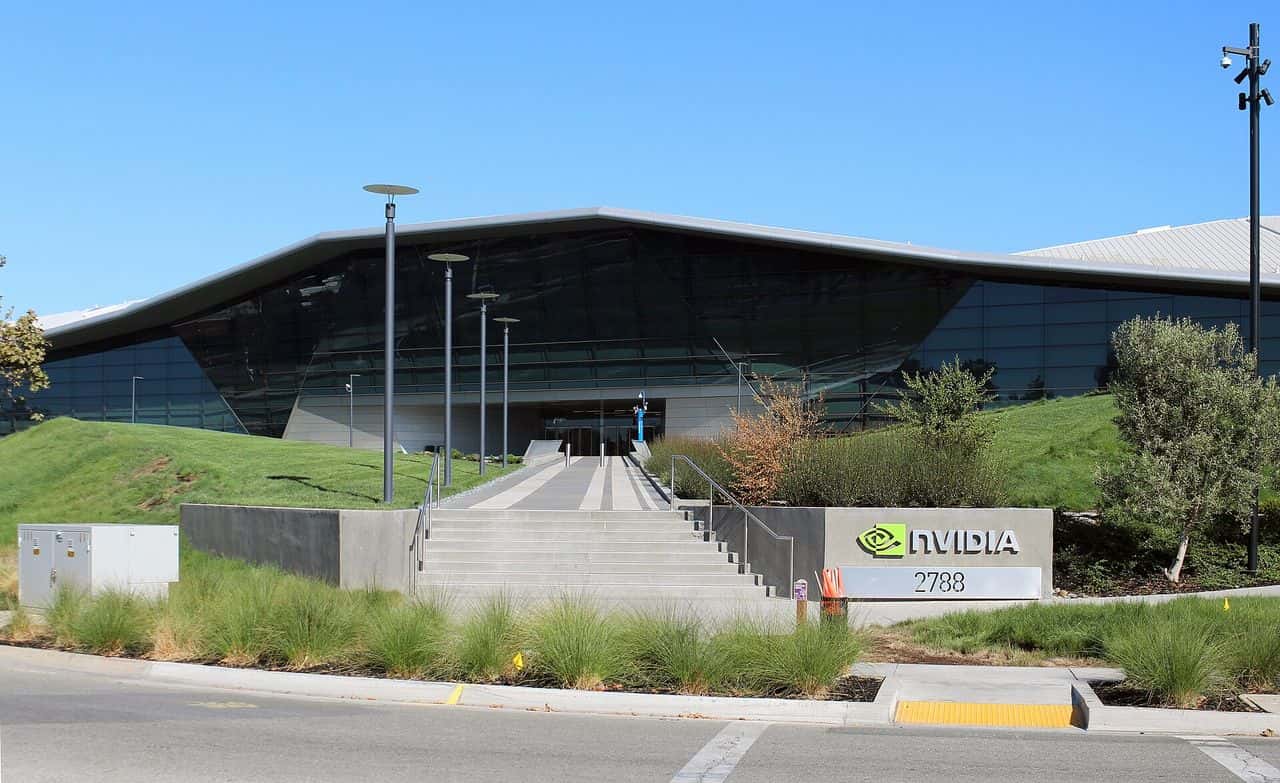 File photo · NVIDIA’s headquarters, Santa Clara · Aug 2018 · Coolcaesar · CC BY-SA 4.0 · Source & license
Earlier context and later coverage are dated relative to this report. Automatically linked reports may cover a broader event.
Earlier context
- · Bloomberg Television · Automatically linked
Putin Moves to Escalate War in Ukraine, Nvidia Fuels Faith in AI Boom
- · CNBC · Automatically linked
- · Investing.com · Automatically linked
U.S. stock futures fall as investors await PCE inflation, Nvidia results
- · Bloomberg Television · Automatically linked
China Defiant Over Iran Ties; Tech Stocks in Focus Before Nvidia Results
- · Bloomberg Television · Automatically linked
- · Bloomberg Television · Arc starting point
- · Yahoo Finance · Automatically linked
- · GlobeNewswire · Automatically linked
NVIDIA Announces Financial Results for Second Quarter Fiscal 2027
- · Yahoo Finance · Automatically linked
- · Yahoo Finance · Automatically linked
- · Bloomberg Television · Automatically linked
An Exclusive Interview with Jensen Huang on Nvidia’s AI Future
- · Yahoo Finance · Automatically linked
- · Yahoo Finance · Automatically linked
Nvidia didn't like Wall Street's estimates. So it tried to reset them.
- · Investing.com · Automatically linked
Nvidia partner Hon Hai’s August sales jump 52% on AI server demand - Bloomberg
- · Bloomberg Television · Automatically linked
Coverage after this report
- · Yahoo Finance · Automatically linked
Nvidia (NVDA)’s First-Ever Year-Ahead Forecast Puts It on a Path to Pass Apple and Alphabet
- · Yahoo Finance · Automatically linked
TSM’s Record Sales Say AI Chips Are Booming. The Nvidia-AMD Fight Is Now About Who Keeps the Margin
Follow this story to find new evidence in your Following desk.
Price context does not establish that the story caused the move.
Nvidia’s $215.9B FY2026 revenue and 65.5% year-over-year growth show substantial commercial momentum, while executed price increases could protect economics against higher memory costs.
Memory pricing described as “extreme” and headed higher could compress Nvidia’s 71.1% gross margin if customer pricing does not fully offset the input increase; the available report provides no quantified offset.
Kept as written · your side, if you take one, is graded privately against licensed closes after 10 trading days · nothing here is advice · How the Wire is made →