Qatar cuts state spending at home and abroad as war shrinks economy
Qatar is cutting state spending at home and abroad after the US-Iran conflict over the Strait of Hormuz damaged its economy. The retrenchment points to a broader Gulf fiscal and geopolitical shock, with weaker domestic demand and overseas project activity as the immediate transmission channels.
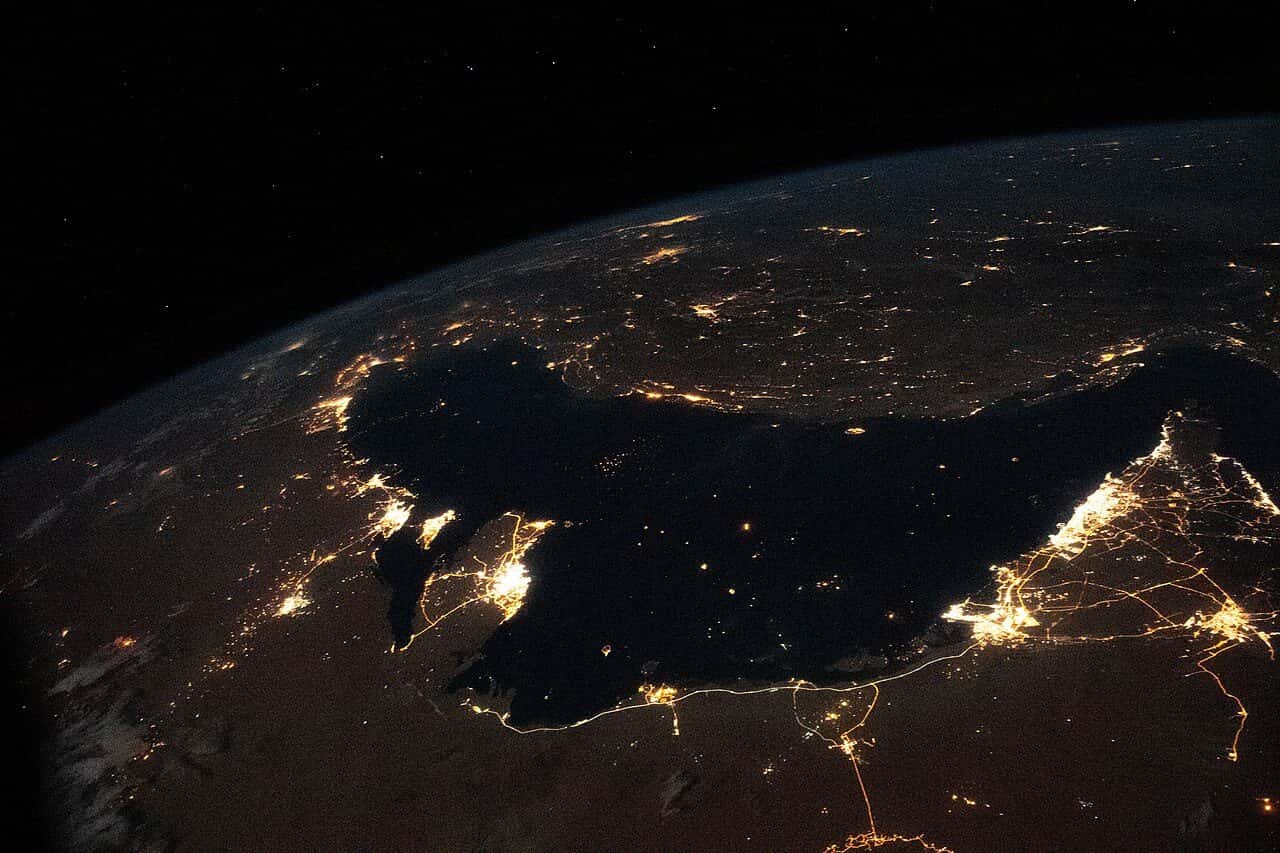 File photo · The Persian Gulf at night, from the International Space Station · Aug 2020 · NASA · Public domain · Source & license
The story
The Financial Times reported on August 22 that Qatar, a wealthy Gulf state, is reducing government spending both domestically and internationally. The cuts follow economic damage from the US-Iran conflict over the Strait of Hormuz, according to the report.
The story directly concerns Qatar’s state budget, domestic activity and overseas commitments rather than a named public company. Its wider connection runs through Gulf infrastructure, construction, energy and sovereign-investment projects that rely on government spending and regional stability.
The scale and duration of the cuts are not specified in the available reporting. Further detail on the affected ministries, projects and external investments would clarify how far the retrenchment extends and whether it represents a temporary response to the conflict or a longer fiscal reset.
Our read · Sat, Aug 22
With no named listed company or ticker enrichment, the report is a macro risk signal for Gulf-linked activity rather than a grounded single-stock trade.
Why. The immediate implication is weaker visibility for Qatar-linked domestic and overseas projects, but the available report gives no company exposure, financial magnitude or market valuation to translate that risk into a single-name setup. The key differentiator is whether the spending cuts prove temporary and conflict-driven or become a broader retrenchment in state investment.
Both cases
What could change this view: A lack of disclosed cut sizes, affected projects and listed-company exposure prevents a specific trade read; de-escalation or rapid restoration of spending would undercut the risk signal.
Who reported it · 1
Keep reading
Latest on the Wire
Walmart raises full-year outlook as e-commerce wins shoppersAnthropic IPO could become the largest in US history on ThursdayContinuing claims rise as Goldman sees Fed hikes in December and MarchPIF Tower in Riyadh reportedly damaged in second Houthi attackTrump Media buys back $100 million of notes ahead of Nov. 30 cash demandContinue on the Wire →Latest on the Wire
Biohaven reports confirmed BHV-1530 responses in two FGFR3 cancersSky reserve linked to $518 million in illicit activity, investigation findsBitcoin nears $64,000 as Anthropic IPO lifts Nasdaq futures nearly 2%UniCredit reaches agreement with Berlin over Commerzbank takeoverContinue on the Wire →Top this week
Nvidia allies lobby board to bring back Jensen Huang as CEONvidia chair rules out Huang return as CEO after 75% sales outlookNvidia interim CEO Colette Kress faces first earnings test after HuangAnthropic Said to Guide IPO Pricing Above Market RangeNvidia CEO Jensen Huang reportedly resigns as US-China tensions riseAbout this report
Reported by Financial Times, . Who answers for this
The only report in this record. Closes are licensed end-of-day data from Databento; the move after a story is its first close against the close before it. How this is decided →
Kept as written · your side, if you take one, is graded privately against licensed closes after 10 trading days · nothing here is advice · How the Wire is made →