Brent nears $108 as FOMC begins, weighing on US stock futures
US stock futures faced pressure as Brent crude approached $108 and the Federal Open Market Committee began its meeting. The setup puts energy-driven inflation and the Fed’s next signal at the center of the market’s near-term direction.
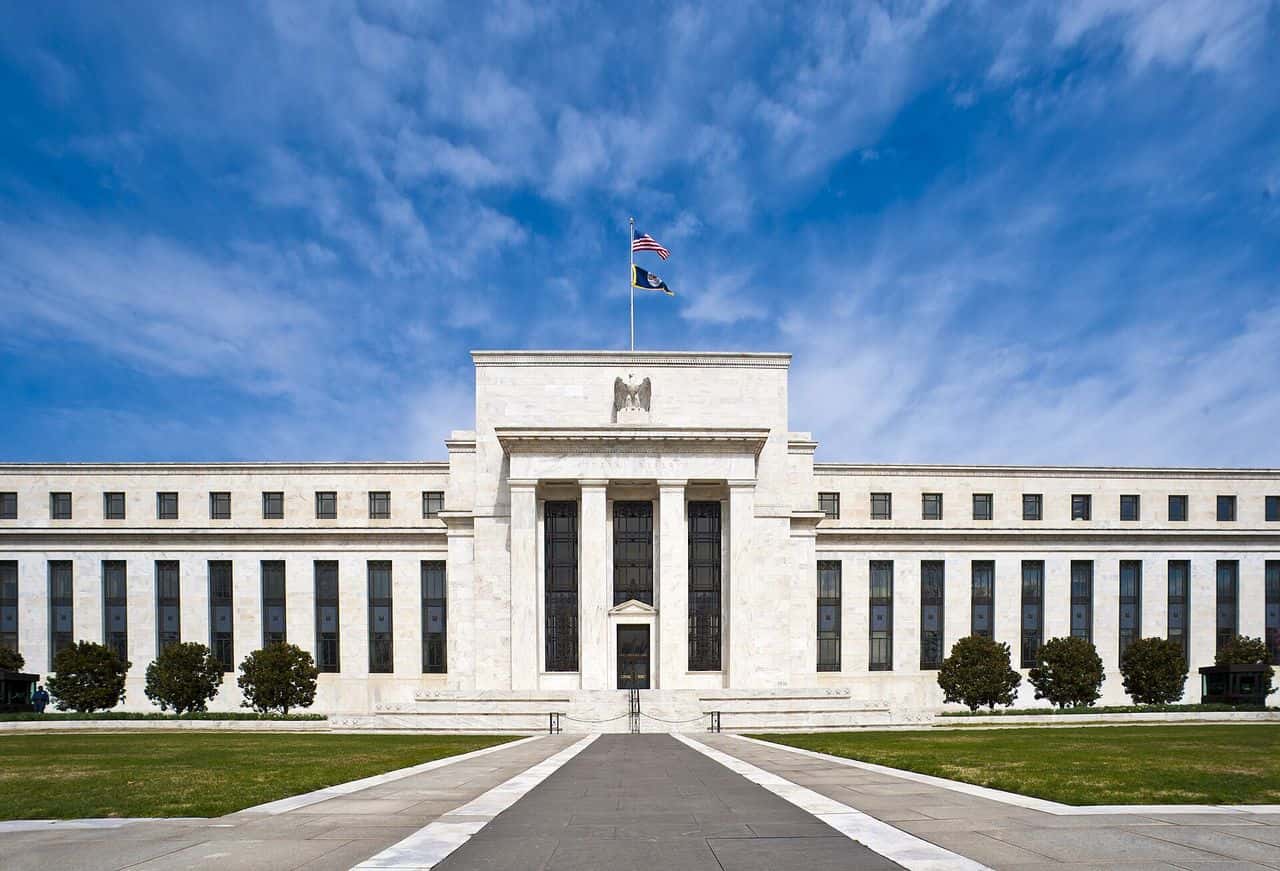 File photo · The Federal Reserve’s Eccles Building, Washington · Mar 2011 · Federal Reserve · Public domain · Source & license
The story
Benzinga reported pressure across S&P 500, Dow and Nasdaq futures as Brent crude neared $108, while the Federal Open Market Committee commenced its meeting on September 15.
The market is entering the FOMC decision with crude near a level that can reinforce inflation concerns. The immediate change versus a routine policy meeting is the combination of elevated energy prices and active central-bank deliberations, which can make rate expectations more sensitive to the committee’s statement and subsequent guidance.
The direct transmission runs through inflation expectations, interest-rate pricing and company costs. Higher Brent prices can support energy producers while raising fuel and input expenses for transport, industrial and consumer businesses; the FOMC’s communication affects discount rates across equities, with growth-sensitive shares generally more exposed to changes in rate expectations.
The next decisive evidence is the FOMC’s policy announcement and accompanying communication. The reaction in Treasury yields, the dollar, energy shares and rate-sensitive equity sectors will show whether the market treats Brent near $108 as a durable inflation impulse or as a temporary shock.
Our read · Tue, Sep 15
The oil-and-Fed collision leaves the broad equity setup mixed, with inflation pressure weighing on rate-sensitive shares while energy exposure provides an offset.
Why. The immediate market read is mixed rather than directional: Brent near $108 raises the inflation and cost risk for broad equities, but it can support energy-linked earnings. The FOMC statement and projections are the deciding evidence because they will determine whether policymakers validate a higher-for-longer rate interpretation or look through the oil move.
Both cases
What could change this view: A dovish FOMC communication or a rapid retreat in Brent could reverse the pressure on rate-sensitive equities, while a hawkish message alongside sustained crude strength would deepen it.
Who reported it · 2
Keep reading
Latest on the Wire
Trump threatens overseas AI data-centre ban for US firmsBitcoin drops below $59,000 as cash rush revives summer-low testGreer says US chip curbs will close China export-control loopholesBlackRock bitcoin ETF posts $541.1 million outflow as tech sell-off spreadsPoland says Russian missiles and drone crashed during Ukraine assaultContinue on the Wire →Latest on the Wire
BlackRock bitcoin ETF posts $541.1 million outflow as tech sell-off spreadsPoland says Russian missiles and drone crashed during Ukraine assaultUS MATCH Act puts ASML at center of China chip export disputeBeijing plans to bar young red-chip firms from overseas listingsContinue on the Wire →Top this week
Nvidia allies lobby board to bring back Jensen Huang as CEONvidia chair rules out Huang return as CEO after 75% sales outlookAnthropic Said to Guide IPO Pricing Above Market RangeNvidia interim CEO Colette Kress faces first earnings test after HuangAnthropic IPO could become the largest in US history on ThursdayAbout this report
Reported by Benzinga as Stock Market Today: S&P 500, Dow and Nasdaq Futures Face Pressure as Brent Nears $108 and FOMC Commences
, . Who answers for this
2 reports from 2 publishers in this record. Closes are licensed end-of-day data from Databento; the move after a story is its first close against the close before it. How this is decided →
Kept as written · your side, if you take one, is graded privately against licensed closes after 10 trading days · nothing here is advice · How the Wire is made →