Tesla Begins Offering Rides in a Car Without a Steering Wheel
Tesla has begun offering rides in its steering-wheel-free Cybercab, advancing Elon Musk’s autonomous-driving vision while leaving the timing of broad availability unclear. The launch creates a high-profile commercialization test for Tesla as its latest reported revenue and profitability figures show a business still facing pressure.
Tesla has begun offering rides in its Cybercab, a vehicle designed without a steering wheel. The vehicle is meant to operate without a human driver and represents Elon Musk's long-standing vision of autonomous transportation. The initial offering is a step beyond demonstrations because it puts the vehicle into a ride experience.
The launch comes against a mixed operating backdrop for Tesla. The company reported FY2025 revenue of $94.8B, down 2.9% YoY, with an 18.0% gross margin and a 4.0% net margin. Diluted EPS was $1.08. Those figures frame the Cybercab as a potential new growth avenue, but they also show that the existing business is not entering the test from an unpressured position.
The direct company connection is Tesla's: a successful autonomous ride service could eventually add transportation revenue beyond conventional vehicle sales. Musk is the central executive tied to the strategy and its public vision. The steering-wheel-free design also makes the autonomy claim more tangible than a software feature added to a conventional car, though deployment volumes, revenue targets, and operating scale remain unclear.
A key question is when the Cybercab will be widely available and under what regulatory, technical, geographic, and economic conditions. Without those details, the first rides demonstrate progress but do not yet quantify the commercial contribution.
Future evidence would include deployment timing, operating locations, ride volumes, pricing, and production plans. Company reporting should also show whether autonomous offerings are affecting revenue, margins, or cash generation. The key open issue is whether the initial service becomes a scalable business rather than a limited demonstration of Musk's autonomous-driving ambition.
Tesla (TSLA) has begun offering rides in its steering-wheel-free Cybercab.
The near-term trade case is constrained by missing commercialization details: the company has started offering rides, but broad availability, scale, pricing, and revenue remain undefined. That uncertainty matters more because Tesla's FY2025 revenue was $94.8B, down 2.9% YoY, while net margin was 4.0%, leaving limited evidence that the new service can offset pressure in the existing business.
The read weakens if Tesla provides a credible, near-term deployment plan with measurable ride volume, pricing, and revenue contribution; it also weakens if the initial service remains limited without a disclosed path to scale.
CoverageSource: NYT Business · Published here FRI, SEP 4 · 9:30 AM ET · 4 reports · 3 publishers in this record · latest listed: NYT Business · FRI, SEP 4 · 9:30 AM ETHow this is decided →
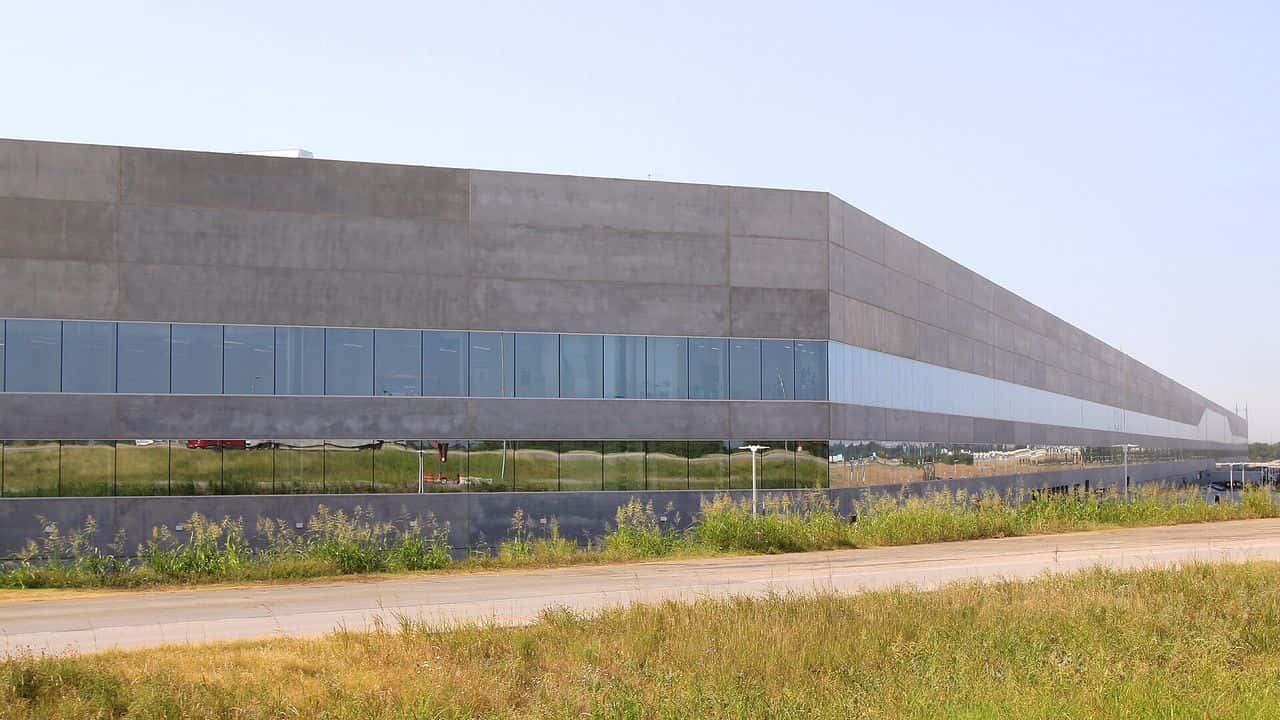 File photo · Tesla’s Gigafactory Texas, Austin · Jun 2022 · Larry D. Moore · CC BY 4.0 · Source & license
Earlier context and later coverage are dated relative to this report. Automatically linked reports may cover a broader event.
No later reports linked yet.
Follow this story to find new evidence in your Following desk.
Price context does not establish that the story caused the move.
The steering-wheel-free Cybercab turns Tesla’s autonomy thesis into an operating service, creating a potential new revenue line beyond conventional vehicle sales.
Tesla’s FY2025 revenue fell 2.9% YoY and net margin was 4.0%, leaving the near-term financial case unproven.
Kept as written · your side, if you take one, is graded privately against licensed closes after 10 trading days · nothing here is advice · How the Wire is made →