Markets price rates above the Fed’s path as stagflation risks rise
Markets are pricing interest rates above the Federal Reserve’s path, raising the risk that inflation and slower growth could arrive together. That divergence puts the burden on upcoming inflation, labor and Fed signals to determine whether higher yields are a durable repricing or a stagflation warning.
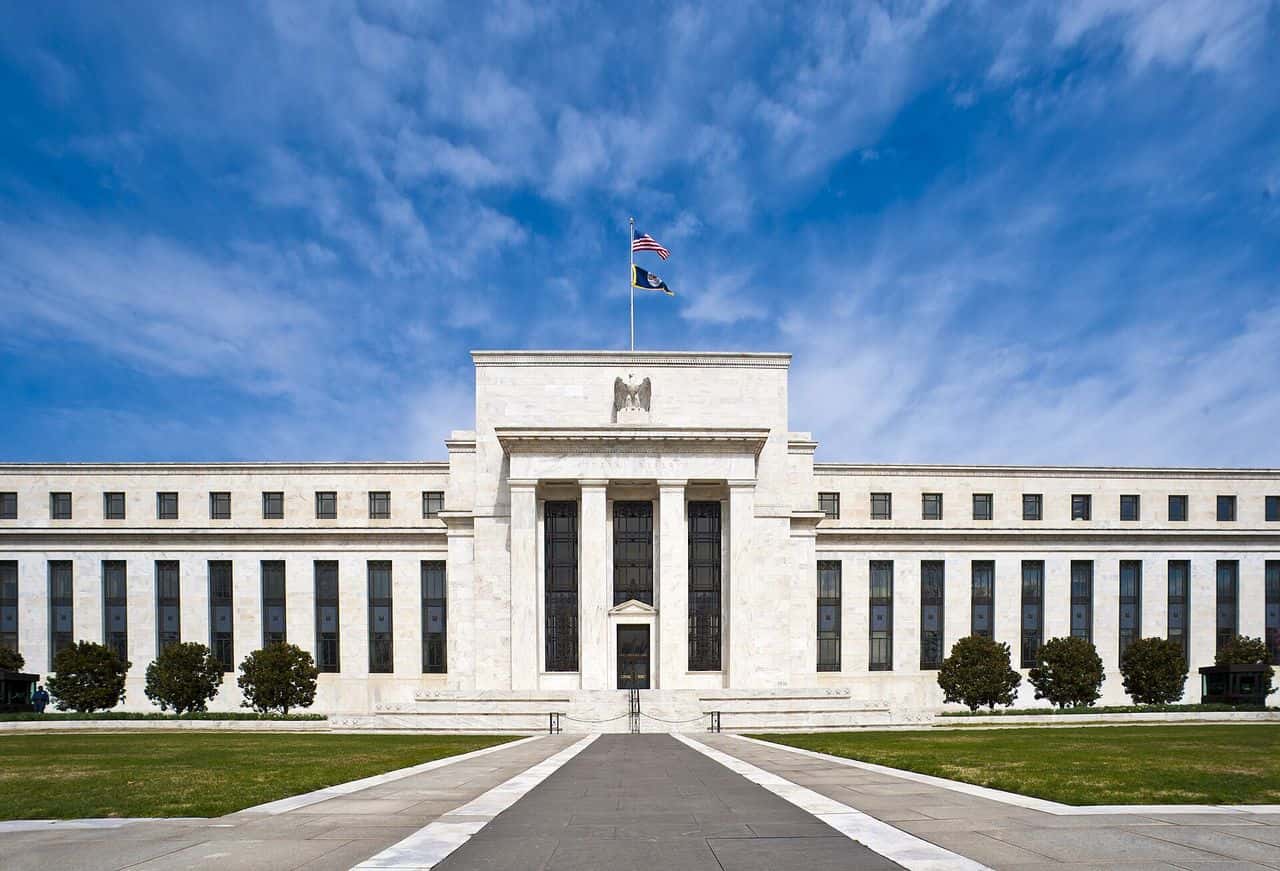 File photo · The Federal Reserve’s Eccles Building, Washington · Mar 2011 · Federal Reserve · Public domain · Source & license
The story
Interest-rate markets are pricing a higher path than the Federal Reserve’s own projections, according to the report’s framing. The gap has revived concern that investors may be assigning more weight to persistent inflation risks than to the central bank’s expected policy trajectory.
The setup is a stagflation test: rates could remain elevated even as economic growth loses momentum. The key change is the disagreement between market pricing and the Fed’s path, rather than a new policy decision described in the report.
That divergence directly affects rate-sensitive assets, including government bonds, housing and companies whose valuations depend heavily on future cash flows. It also raises the hurdle for businesses and borrowers exposed to refinancing costs if market rates remain above the central bank’s expected course.
The report’s framing leaves the outcome unresolved. Higher market rates could reflect a credible inflation concern, but the same pricing could also prove too pessimistic if inflation cools or growth weakens enough to pull yields back toward the Fed’s path.
The next decisive evidence is the sequence of inflation, labor-market and Federal Reserve releases after the story’s publication. A sustained market premium over the Fed’s projected path alongside firm inflation would strengthen the stagflation interpretation; softer price and activity data would weaken it.
Our read · Fri, Sep 18
The rates gap leaves the macro read mixed: markets are pricing more inflation risk than the Fed’s path implies, but weaker growth could close the divergence.
Why. The immediate implication is a cross-asset valuation and financing headwind if market rates stay above the Federal Reserve’s path, while a growth slowdown would make that pricing increasingly vulnerable. The trade remains two-sided because the same divergence can represent persistent inflation risk or an overextended market view that reverses on softer data.
Both cases
What could change this view: A reversal in inflation or growth data that pulls market-rate expectations back toward the Fed’s path would invalidate the stagflation read.
Who reported it · 1
Keep reading
Latest on the Wire
AMD shares fall 11% after Hunterbrook warns over China linksWalmart raises full-year outlook as e-commerce wins shoppersAnthropic IPO could become the largest in US history on ThursdayContinuing claims rise as Goldman sees Fed hikes in December and MarchPIF Tower in Riyadh reportedly damaged in second Houthi attackContinue on the Wire →Latest on the Wire
Trump Media buys back $100 million of notes ahead of Nov. 30 cash demandBiohaven reports confirmed BHV-1530 responses in two FGFR3 cancersTrump, Xi and Putin pledge more refined fuel after first trilateral summitSky reserve linked to $518 million in illicit activity, investigation findsContinue on the Wire →Top this week
Nvidia allies lobby board to bring back Jensen Huang as CEONvidia chair rules out Huang return as CEO after 75% sales outlookAnthropic Said to Guide IPO Pricing Above Market RangeNvidia interim CEO Colette Kress faces first earnings test after HuangNvidia CEO Jensen Huang reportedly resigns as US-China tensions riseAbout this report
Reported by Yahoo Finance as The Markets See Rates Going Higher Than the Fed Does. Is Stagflation Ahead?
, . Who answers for this
The only report in this record. Closes are licensed end-of-day data from Databento; the move after a story is its first close against the close before it. How this is decided →
Kept as written · your side, if you take one, is graded privately against licensed closes after 10 trading days · nothing here is advice · How the Wire is made →