BoE weighs a quiet endgame for its quantitative-tightening programme
The Financial Times examines the Bank of England’s endgame for quantitative tightening as policymakers seek a deliberately uneventful transition. The setup is a slower-burn rates and liquidity story, with the mechanics of balance-sheet normalization more important than a single policy shock.
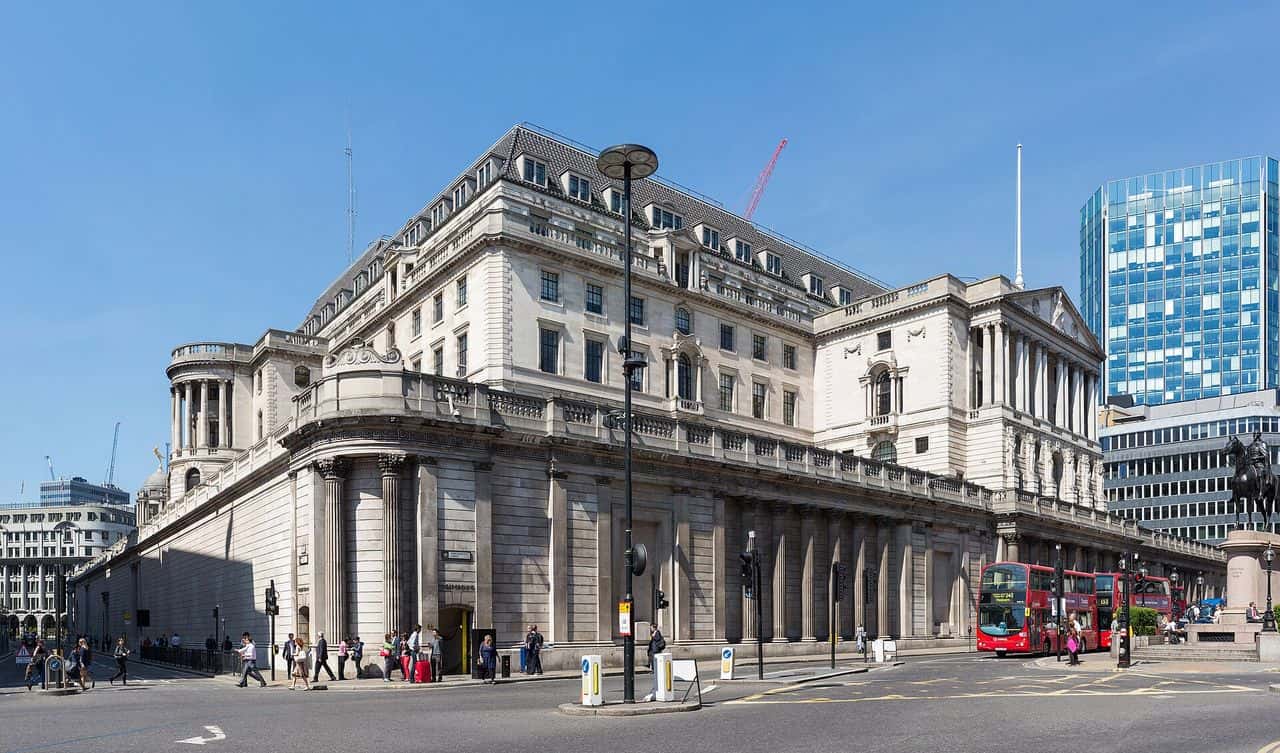 File photo · The Bank of England, London · Jun 2015 · Diliff · CC BY-SA 3.0 · Source & license
The story
The Financial Times frames the Bank of England’s quantitative-tightening program around its eventual end state, with policymakers focused on keeping the process uneventful. The article’s framing points to the operational challenge of reducing the central bank’s balance sheet without creating unnecessary volatility in government bonds or money markets.
The BoE has been allowing its holdings to run down as part of the broader normalization of policy after the era of large-scale asset purchases. The endgame matters because the pace and composition of balance-sheet reduction affect the supply of gilts absorbed by private investors, alongside the Bank’s separate decisions on interest rates.
The immediate focus is the institutional mechanism rather than a single company. UK government bond markets, banks and other fixed-income investors are linked through funding conditions, collateral and the supply of assets that the private sector must hold as the BoE withdraws from the market.
The central uncertainty is how policymakers define a successful stopping point and how transparently they communicate it. A gradual, predictable approach would support the effort to keep the transition boring; a change in the pace or signals around the portfolio could still alter rate-market expectations.
The next markers are the BoE’s scheduled policy communications and its operational decisions on the balance sheet. Investors will look for the pace of gilt runoff, the eventual framework for reserves and any sign that market functioning is constraining QT.
Our read · Fri, Sep 18
The BoE’s QT endgame keeps the read centred on gradual liquidity normalization rather than a discrete shock to UK rates.
Why. The implication is a market-structure story, not a single-name trade: a controlled runoff would reduce the risk of an abrupt gilt-supply or reserve shock, while any change in pace could reset expectations for UK rates and liquidity. With no company-specific exposure identified, the evidence supports monitoring the BoE’s operational guidance rather than a directional equity call.
Both cases
What could change this view: A surprise change in the pace or composition of QT, or a deterioration in gilt-market functioning, would overturn the quiet-transition read.
Who reported it · 1
Keep reading
Latest on the Wire
Trump threatens overseas AI data-centre ban for US firmsBitcoin drops below $59,000 as cash rush revives summer-low testGreer says US chip curbs will close China export-control loopholesBlackRock bitcoin ETF posts $541.1 million outflow as tech sell-off spreadsPoland says Russian missiles and drone crashed during Ukraine assaultContinue on the Wire →Latest on the Wire
BlackRock bitcoin ETF posts $541.1 million outflow as tech sell-off spreadsPoland says Russian missiles and drone crashed during Ukraine assaultUS MATCH Act puts ASML at center of China chip export disputeBeijing plans to bar young red-chip firms from overseas listingsContinue on the Wire →Top this week
Nvidia allies lobby board to bring back Jensen Huang as CEONvidia chair rules out Huang return as CEO after 75% sales outlookAnthropic Said to Guide IPO Pricing Above Market RangeNvidia interim CEO Colette Kress faces first earnings test after HuangAnthropic IPO could become the largest in US history on ThursdayAbout this report
Reported by Financial Times as The QT endgame at the BoE
, . Who answers for this
The only report in this record. Closes are licensed end-of-day data from Databento; the move after a story is its first close against the close before it. How this is decided →
Kept as written · your side, if you take one, is graded privately against licensed closes after 10 trading days · nothing here is advice · How the Wire is made →