Economist urges Fed to hike 50 basis points next week as bonds near danger zone
A top economist is calling for the Federal Reserve to raise rates by 50 basis points next week, while the bond market is already approaching the level he identifies as dangerous. That combination raises the risk of a sharper rates shock across bonds and rate-sensitive assets if policymakers follow the recommendation.
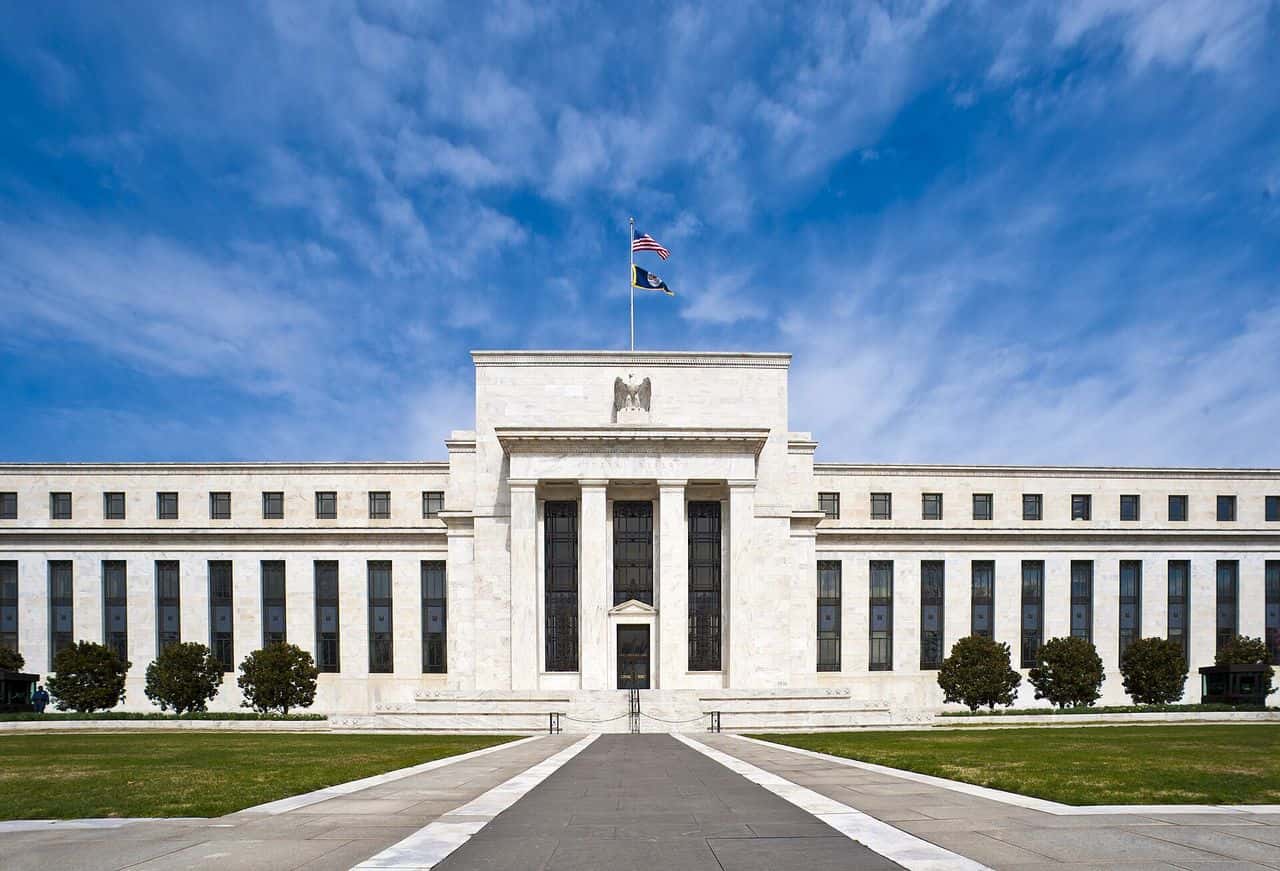 File photo · The Federal Reserve’s Eccles Building, Washington · Mar 2011 · Federal Reserve · Public domain · Source & license
The story
A top economist believes the Federal Reserve should raise interest rates by 50 basis points at its meeting next week. The bond market is already near the economist's stated danger zone.
The setup marks a potential escalation from the market's current positioning: the bond market is described as already close to a level that could make an aggressive hike more destabilizing.
The immediate transmission channel is rates: a larger-than-expected increase would generally pressure government bonds and could tighten financial conditions for rate-sensitive borrowers and assets.
The key uncertainty is the economist's identity, the danger-zone threshold and the Fed's current guidance. Next week's Fed decision is the event that would confirm or reject the aggressive-hike scenario; the statement and officials' projections would also show whether the move is presented as a one-off adjustment or the start of a tighter path.
Our read · Sat, Sep 12
The report puts the risk on the downside for bonds and rate-sensitive assets, but the missing economist, threshold and Fed pricing keep this as a macro vote rather than a single-name call.
Why. The setup increases near-term rate-volatility risk because an aggressive hike is being advocated while the bond market is already near the cited danger zone. The read stays non-directional because the report supplies neither the threshold nor the market’s implied probability, leaving the size of any surprise unresolved.
Both cases
What could change this view: The trade fails if the Fed holds or delivers a smaller move without a materially more hawkish path, or if the economist’s danger-zone claim is not tied to a measurable market level.
Who reported it · 1
Keep reading
Latest on the Wire
Trump threatens overseas AI data-centre ban for US firmsBitcoin drops below $59,000 as cash rush revives summer-low testGreer says US chip curbs will close China export-control loopholesBlackRock bitcoin ETF posts $541.1 million outflow as tech sell-off spreadsPoland says Russian missiles and drone crashed during Ukraine assaultContinue on the Wire →Latest on the Wire
BlackRock bitcoin ETF posts $541.1 million outflow as tech sell-off spreadsPoland says Russian missiles and drone crashed during Ukraine assaultUS MATCH Act puts ASML at center of China chip export disputeBeijing plans to bar young red-chip firms from overseas listingsContinue on the Wire →Top this week
Nvidia allies lobby board to bring back Jensen Huang as CEONvidia chair rules out Huang return as CEO after 75% sales outlookAnthropic Said to Guide IPO Pricing Above Market RangeNvidia interim CEO Colette Kress faces first earnings test after HuangAnthropic IPO could become the largest in US history on ThursdayAbout this report
Reported by Yahoo Finance as Top Economist Says the Fed Should Hike Rates 50 Basis Points Next Week. The Bond Market Is Already Near His Danger Zone.
, . Who answers for this
The only report in this record. Closes are licensed end-of-day data from Databento; the move after a story is its first close against the close before it. How this is decided →
Kept as written · your side, if you take one, is graded privately against licensed closes after 10 trading days · nothing here is advice · How the Wire is made →