U.S. stocks slip after Fed rate hike caps a volatile week
U.S. stocks slipped in seesaw trading as an eventful week ended after a Federal Reserve rate hike. The late-week weakness leaves broad equity direction tied to how markets digest tighter policy and renewed volatility.
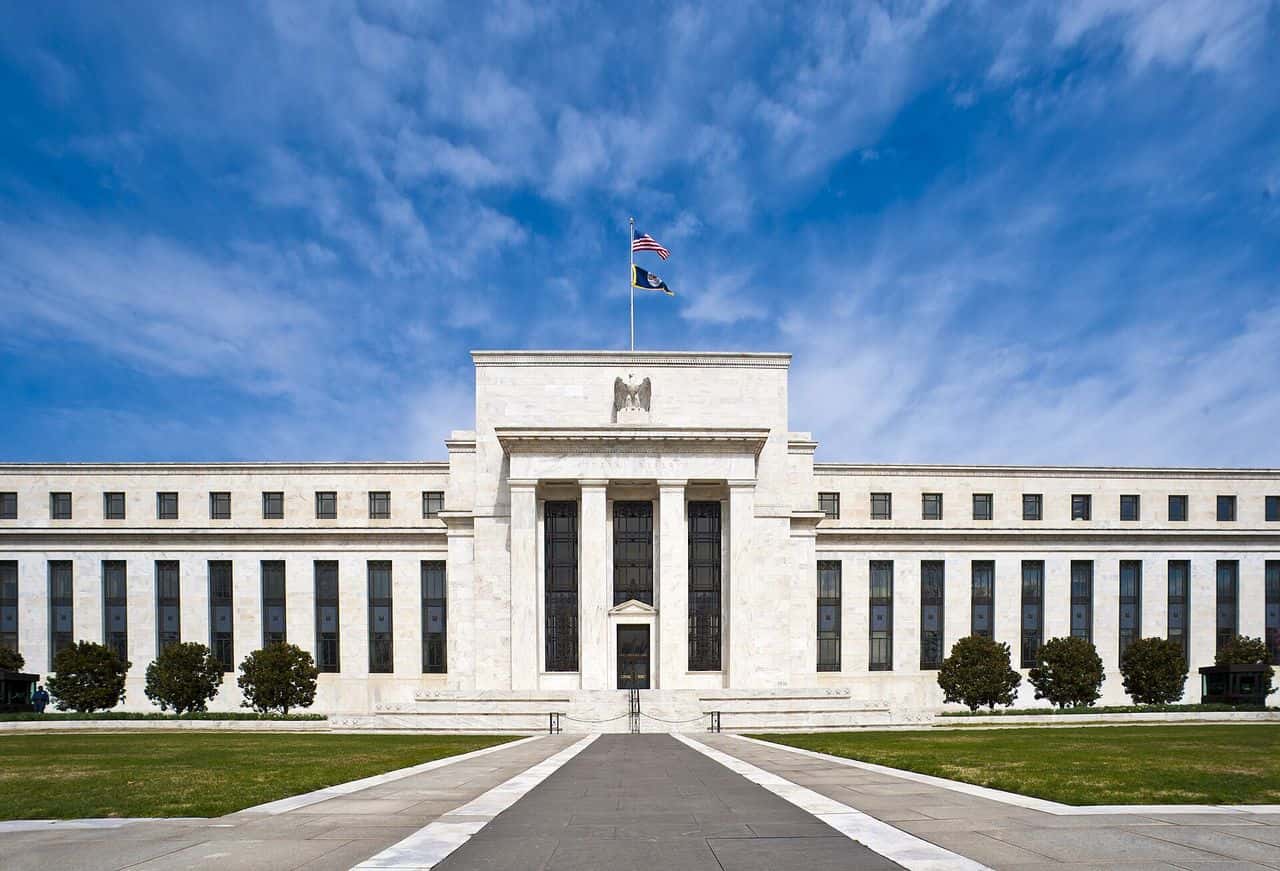 File photo · The Federal Reserve’s Eccles Building, Washington · Mar 2011 · Federal Reserve · Public domain · Source & license
The story
U.S. stocks moved lower in choppy trading on September 18 as an eventful week came to a close. The market backdrop included a Federal Reserve rate hike, but no additional details on the size of the move or the session’s index-level performance were established.
The week’s policy shift gives the market a fresh rate-setting reference point after a period of heightened event risk. The end-of-week decline followed seesaw action rather than a sustained one-way move, indicating that the immediate reaction was unsettled.
The development touches equities broadly through the cost of capital and the valuation assigned to future earnings, but no single company or sector was identified as the focal point. Without a named issuer, the read is on the market regime rather than a company-specific revenue, cost or contract channel.
The key uncertainty is whether the rate hike produces continued pressure on equities or is absorbed after the week’s volatility fades. Further price action and subsequent Federal Reserve communication will establish whether the late-week slip was a durable policy response or simply the final move in a choppy session.
Our read · Fri, Sep 18
The rate hike leaves the read mixed for U.S. equities as late-week selling followed a volatile, seesaw session.
Why. The immediate implication is a higher-volatility macro tape rather than a single-name setup: tighter policy can pressure equity valuations, while the seesaw action shows that the market response was not one-directional. The next Federal Reserve communication and incoming rate-sensitive market data will determine whether this becomes sustained equity pressure or a short-lived end-of-week move.
Both cases
What could change this view: A rapid reversal in rate expectations or a benign market response to the hike would invalidate the downside macro read.
Who reported it · 3
Keep reading
Latest on the Wire
AMD shares fall 11% after Hunterbrook warns over China linksWalmart raises full-year outlook as e-commerce wins shoppersAnthropic IPO could become the largest in US history on ThursdayContinuing claims rise as Goldman sees Fed hikes in December and MarchPIF Tower in Riyadh reportedly damaged in second Houthi attackContinue on the Wire →Latest on the Wire
Trump Media buys back $100 million of notes ahead of Nov. 30 cash demandBiohaven reports confirmed BHV-1530 responses in two FGFR3 cancersTrump, Xi and Putin pledge more refined fuel after first trilateral summitSky reserve linked to $518 million in illicit activity, investigation findsContinue on the Wire →Top this week
Nvidia allies lobby board to bring back Jensen Huang as CEONvidia chair rules out Huang return as CEO after 75% sales outlookAnthropic Said to Guide IPO Pricing Above Market RangeNvidia interim CEO Colette Kress faces first earnings test after HuangNvidia CEO Jensen Huang reportedly resigns as US-China tensions riseAbout this report
Reported by Investing.com as U.S. stocks slip in seesaw action at end of eventful week marked by Fed rate hike
, . Who answers for this
3 reports from 2 publishers in this record. Closes are licensed end-of-day data from Databento; the move after a story is its first close against the close before it. How this is decided →
Kept as written · your side, if you take one, is graded privately against licensed closes after 10 trading days · nothing here is advice · How the Wire is made →