Barclays, UBS back BoE hikes as inflation risks mount
Barclays and UBS are backing Bank of England rate hikes as inflation risks mount. The call raises the prospect of tighter UK policy weighing on rate-sensitive assets and the pound’s near-term path.
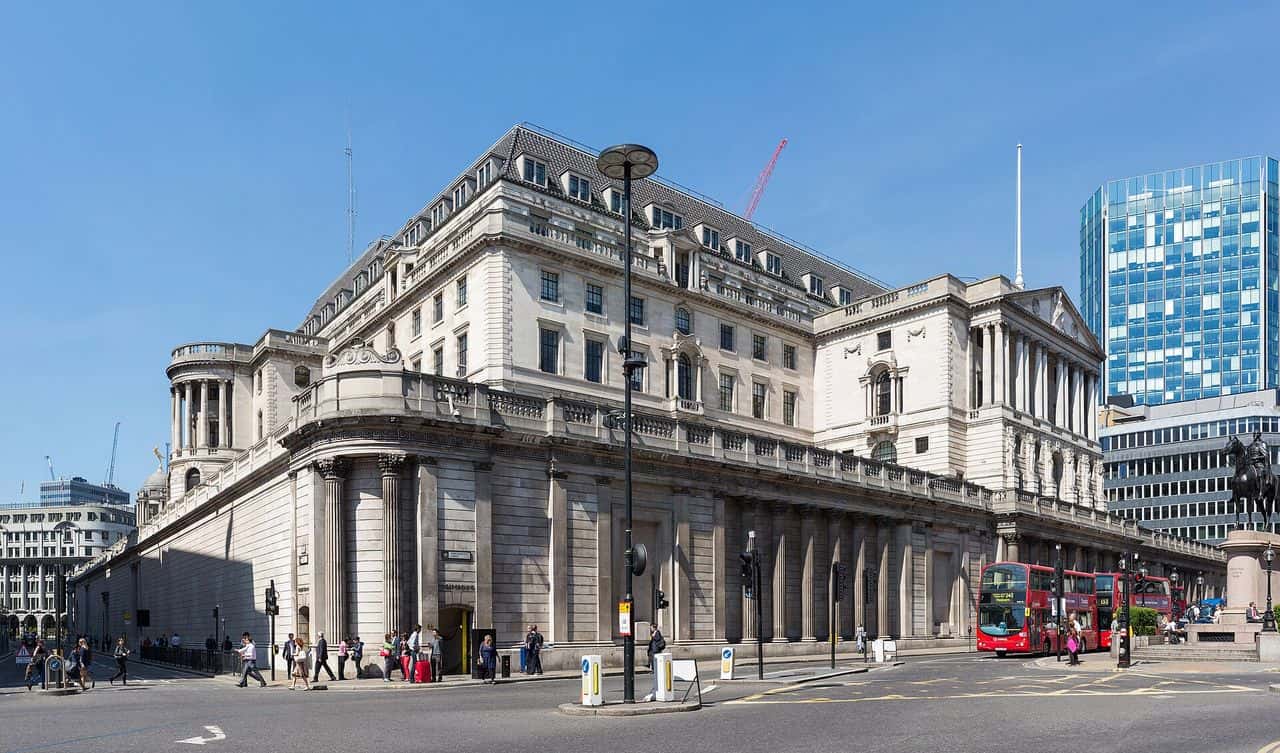 File photo · The Bank of England, London · Jun 2015 · Diliff · CC BY-SA 3.0 · Source & license
The story
Barclays and UBS support further Bank of England hikes, with inflation risks driving their view toward tighter monetary policy. The development comes as markets assess how persistent price pressures may shape the central bank’s next decisions.
The setup puts the focus on the BoE’s response to inflation rather than on a company-specific earnings or balance-sheet event. The central bank’s policy path is the key changeable variable for UK borrowing costs and sterling.
Higher UK rates would directly affect banks, households and companies through funding costs, while also changing the relative appeal of pound-denominated assets. Rate-sensitive sectors would face a different backdrop from exporters or businesses with stronger pricing power.
The immediate uncertainty is the pace and durability of inflation, alongside how the BoE weighs price pressures against growth. Barclays and UBS are expressing a policy view, not announcing a central-bank decision.
The next read will come from the BoE’s policy communications and upcoming inflation data. Evidence of persistent price pressure would reinforce the case for hikes; a clear moderation would weaken it.
Our read · Fri, Sep 18
The Barclays and UBS calls sharpen the tightening risk for UK rates, sterling and rate-sensitive assets, but do not establish a single-name equity read.
Why. The implication is a more restrictive UK policy backdrop if inflation remains persistent, with the main transmission running through borrowing costs, sterling and rate-sensitive assets. The evidence supports a macro risk shift rather than a single-name equity trade, and the next policy communication or inflation release will determine whether that shift persists.
Both cases
What could change this view: A moderation in UK inflation or a weaker growth signal could reduce the case for further BoE hikes and reverse the rate-pressure setup.
Who reported it · 1
Keep reading
Latest on the Wire
Fed releases October meeting minutes three weeks after policy decisionAnthropic Said to Guide IPO Pricing Above Market RangeXi gives Trump a rare hug at Shenzhen airport as US-China tone softensLagarde says she will leave ECB early to counter election misinformationRansomware group The Gentlemen reportedly lists Nvidia for a leakContinue on the Wire →Latest on the Wire
Xi gives Trump a rare hug at Shenzhen airport as US-China tone softensLagarde says she will leave ECB early to counter election misinformationRansomware group The Gentlemen reportedly lists Nvidia for a leakLOW files 8-K — LOWES COMPANIES INCContinue on the Wire →Top this week
Nvidia allies lobby board to bring back Jensen Huang as CEONvidia chair rules out Huang return as CEO after 75% sales outlookNvidia interim CEO Colette Kress faces first earnings test after HuangNvidia CEO Jensen Huang reportedly resigns as US-China tensions riseNvidia CFO Colette Kress to serve as interim CEO after Jensen HuangAbout this report
Reported by Investing.com, . Who answers for this
The only report in this record. Closes are licensed end-of-day data from Databento; the move after a story is its first close against the close before it. How this is decided →
Kept as written · your side, if you take one, is graded privately against licensed closes after 10 trading days · nothing here is advice · How the Wire is made →