Fed’s Schmid Talks Policy, Inflation, Credibility, Communication
Kansas City Fed President Jeff Schmid said policy may already be accommodative and that underlying demand pressures could justify a rate hike as soon as September 16. His comments keep both the September and October meetings live, putting renewed focus on inflation data and the Fed’s communication strategy.
Speaking with Bloomberg Television's Michael McKee at the Jackson Hole Economic Symposium, Kansas City Fed President Jeff Schmid said the current policy stance may be accommodative rather than restrictive. He pointed to persistent underlying demand pressures as a reason a rate increase could be justified as soon as the September 16 meeting.
The remarks push back against the assumption that the Federal Reserve is necessarily leaning toward easier policy. Schmid also rejected the idea that the October 28 meeting is effectively unavailable because it falls near the US midterm election, preserving two potential decision points for policy adjustment.
The comments bear directly on the market's reading of the Fed's reaction function rather than on any single company. A more hawkish assessment would affect interest-rate expectations, Treasury yields, the dollar and valuation-sensitive assets through the discount rate applied to future cash flows.
Schmid's view is not a commitment by the full Federal Open Market Committee to raise rates. The extent to which other officials share his assessment remains unclear, and no new inflation reading or other quantified evidence showing that demand pressures have intensified has emerged.
The next major test is the September 16 Fed meeting. Markets will need to assess incoming inflation and demand data, along with further comments from policymakers, to determine whether Schmid's view represents a broader shift or an individual position. The October 28 meeting remains another potential policy date under his framing, while the future of the Fed's communications and meeting schedule is also part of the discussion.
With no single-company exposure in the story, Schmid’s comments shift the macro risk toward a hawkish September 16 Fed read while leaving the broader market impact unresolved.
The immediate consequence is a higher sensitivity to incoming inflation and demand data ahead of September 16, because Schmid explicitly argued that policy may already be accommodative. The read remains a macro vote rather than a single-name trade: his remarks raise the hawkish risk, but there is no evidence that the full committee has adopted that view.
The setup fails if subsequent inflation and demand data weaken enough to reinforce a restrictive-policy interpretation, or if other Fed officials clearly distance themselves from Schmid’s assessment.
CoverageSource: Bloomberg Television · Published here THU, AUG 27 · 2:16 PM ET · 3 reports · 3 publishers in this record · latest listed: Bloomberg.com · THU, AUG 27 · 2:16 PM ETHow this is decided →
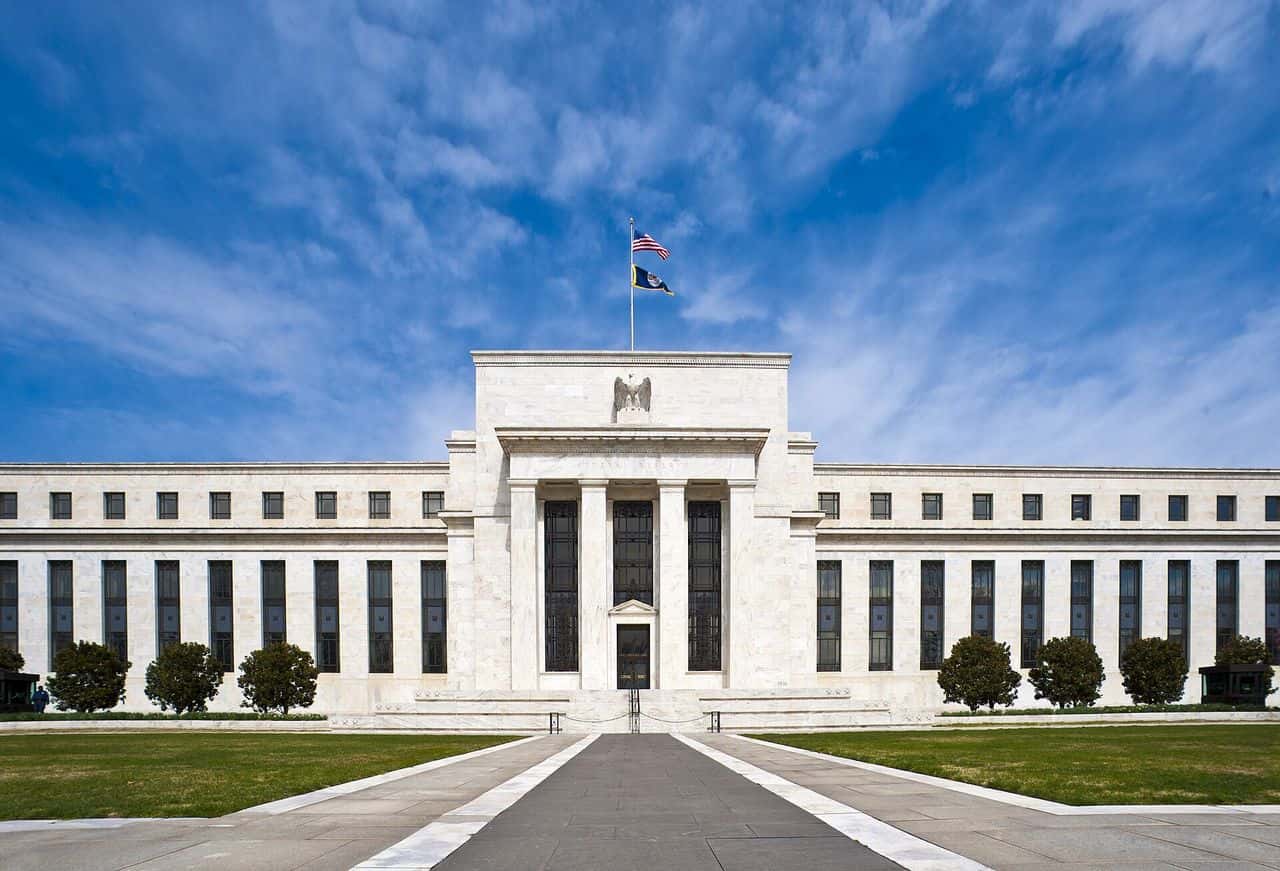 File photo · The Federal Reserve’s Eccles Building, Washington · Mar 2011 · Federal Reserve · Public domain · Source & license
Earlier context and later coverage are dated relative to this report. Automatically linked reports may cover a broader event.
No later reports linked yet.
Follow this story to find new evidence in your Following desk.
A hawkish policy shift would be supported if incoming inflation and demand data validate Schmid’s claim that underlying pressures warrant a rate hike on September 16.
The opposing case is that Schmid’s remarks are only one policymaker’s view, with no new quantified inflation evidence or indication that the broader committee is committed to a hike.
Kept as written · your side, if you take one, is graded privately against licensed closes after 10 trading days · nothing here is advice · How the Wire is made →