Nvidia’s $279 billion memory commitment reshapes the semiconductor competitive landscape
Nvidia’s reported $279 billion memory commitment could give the AI-chip leader greater control over a critical supply bottleneck while reshaping bargaining power across the semiconductor industry. The scale of the commitment raises execution and capital-allocation questions even as Nvidia enters the story with $215.9 billion of revenue, 71.1% gross margins and 55.6% net margins.
Nvidia's reported plan to commit $279 billion to memory would place one of the semiconductor industry's largest chip designers directly into the supply chain for a key component of AI systems. This move is large enough to alter the competitive landscape.
Memory has become strategically important as AI accelerators require large quantities of high-performance memory. A major commitment from Nvidia could give the company more certainty over supply and potentially increase its leverage with memory producers, while changing the allocation of capacity available to other chipmakers.
Nvidia's latest financial figures show $215.9 billion in revenue, up 65.5% year over year, with 71.1% gross margins and 55.6% net margins. Those figures describe a business with substantial operating scale and profitability, but they do not by themselves show how much of the reported commitment would affect costs, inventory, cash flow, or future margins. Memory suppliers and competing accelerator vendors are indirectly implicated through potential changes in capacity access and pricing.
The central uncertainty is the nature of the $279 billion figure. Without disclosed terms, it is not possible to determine whether Nvidia bears substantial financial risk, receives preferential supply, or is responding to commitments already embedded in customer demand. No timetable has been publicly confirmed for execution, so the competitive interpretation remains subject to verification.
The next useful evidence would be Nvidia's disclosure of the commitment's terms, management commentary on memory availability and supply agreements, and the company's next earnings release. Those updates could clarify whether the arrangement supports accelerator shipments, compresses margins through higher input costs, or simply formalizes supply already needed to support growth. Key open questions are the counterparties, duration, funding mechanics, and effect on Nvidia's reported financial targets.
The reported memory commitment is strategically supportive but financially unquantified, leaving NVDA’s supply advantage balanced against execution and margin risk.
The strategic upside is clearer supply access for a business already reporting $215.9 billion of revenue and 71.1% gross margins, but the financial consequence cannot be sized without the commitment’s terms. The absence of a disclosed timetable or structure keeps the read balanced: the arrangement could reinforce accelerator growth, yet it could also raise input-cost and capital-allocation concerns.
The read fails if Nvidia discloses that the $279 billion figure is not a firm commitment, or if the arrangement carries material costs without improving accelerator supply or shipments.
CoverageSource: Investing.com · Published here THU, AUG 27 · 2:08 PM ET · the only report in this recordHow this is decided →
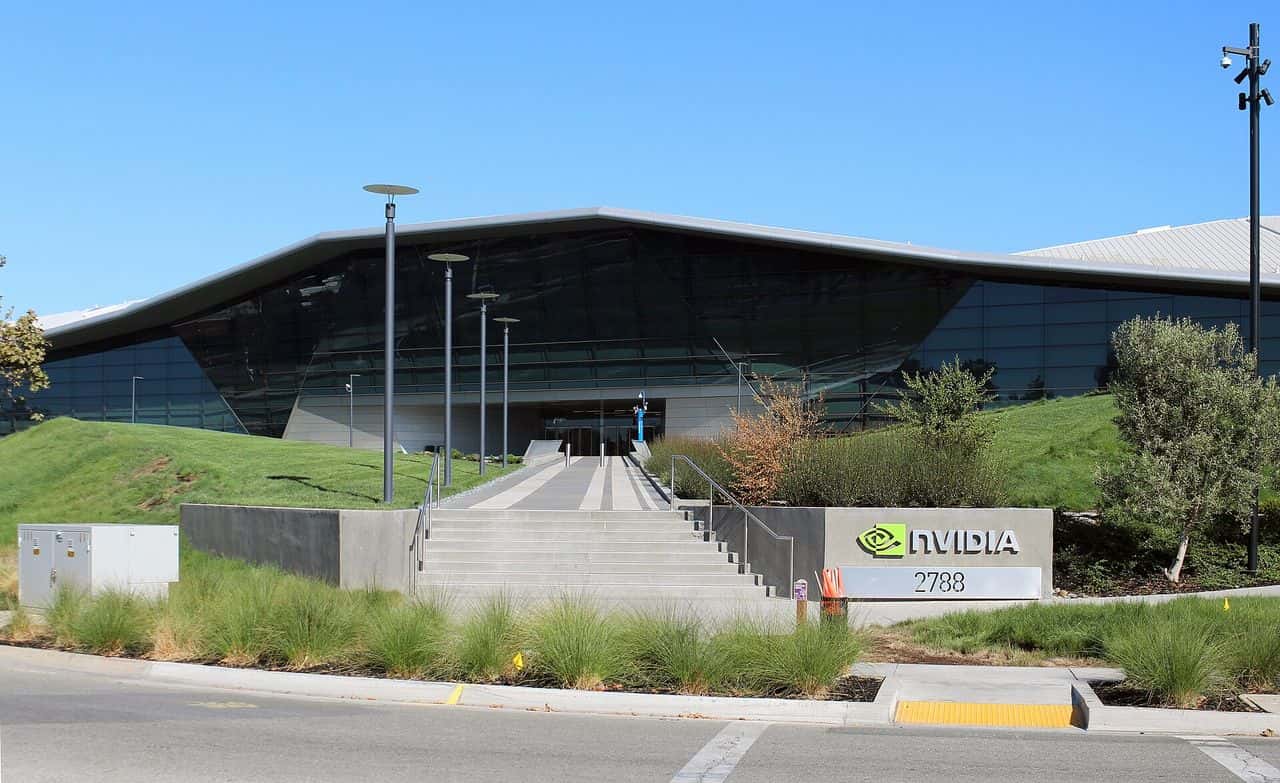 File photo · NVIDIA’s headquarters, Santa Clara · Aug 2018 · Coolcaesar · CC BY-SA 4.0 · Source & license
Earlier context and later coverage are dated relative to this report. Automatically linked reports may cover a broader event.
Earlier context
- · Investing.com · Arc starting point
Nvidia scales back $250 billion OpenAI data center guarantee, WSJ reports
- · Investing.com · Automatically linked
Nvidia to provide up to $105 billion guarantee for OpenAI’s Ohio data center
- · PR Newswire · Automatically linked
- · Yahoo Finance UK · Automatically linked
- · Yahoo Finance · Automatically linked
SpaceX Rises 3% as Musk Pulls the NVIDIA Orbital Data Center Into 2027, JPMorgan Sees 75% Upside
- · Investing.com · Automatically linked
Wall St futures steady after weekly losses; Nvidia results, Jackson Hole in focus
- · MarketWatch · Automatically linked
- · Benzinga · Automatically linked
- · Financial Times · Automatically linked
- · Bloomberg Television · Automatically linked
Z.AI Claims New Model Taking on Anthropic, OpenAI | The China Show
- · Bloomberg Television · Automatically linked
Putin Moves to Escalate War in Ukraine, Nvidia Fuels Faith in AI Boom
- · Investing.com · Automatically linked
S&P 500: Nvidia’s Earnings and Fed Outlook Could Determine the Next Move
Coverage after this report
- · Investing.com · Automatically linked
U.S. stock futures fall as investors await PCE inflation, Nvidia results
- · Bloomberg Television · Automatically linked
China Defiant Over Iran Ties; Tech Stocks in Focus Before Nvidia Results
- · Yahoo Finance · Automatically linked
Nvidia pauses revenue-sharing deals with AI cloud companies, WSJ reports
- · Bloomberg Television · Automatically linked
- · GlobeNewswire · Automatically linked
NVIDIA Announces Financial Results for Second Quarter Fiscal 2027
- · Investing.com · Automatically linked
Anthropic signs $35 billion cloud deal with Nvidia-backed Lambda, WSJ reports
- · GlobeNewswire · Automatically linked
NVIDIA Expands AI Infrastructure Capacity in Partnership With Australia’s Data Center Ecosystem
Follow this story to find new evidence in your Following desk.
Price context does not establish that the story caused the move.
Nvidia’s $215.9 billion revenue base, 65.5% year-over-year growth and 55.6% net margin give it the scale to secure memory supply that could protect AI-accelerator growth.
The opposing case is that the $279 billion figure has no disclosed terms, leaving open the possibility of substantial capital or margin pressure without a demonstrated supply benefit.
Kept as written · your side, if you take one, is graded privately against licensed closes after 10 trading days · nothing here is advice · How the Wire is made →