Houthi attacks threaten Saudi oil output and diversification plans
Houthi attacks have begun hitting Saudi Arabia on a near-daily basis this month, threatening oil output and the kingdom’s multi-trillion-dollar economic diversification plans. The setup raises fresh downside risk for Saudi growth and energy stability as the US-Iran conflict escalates.
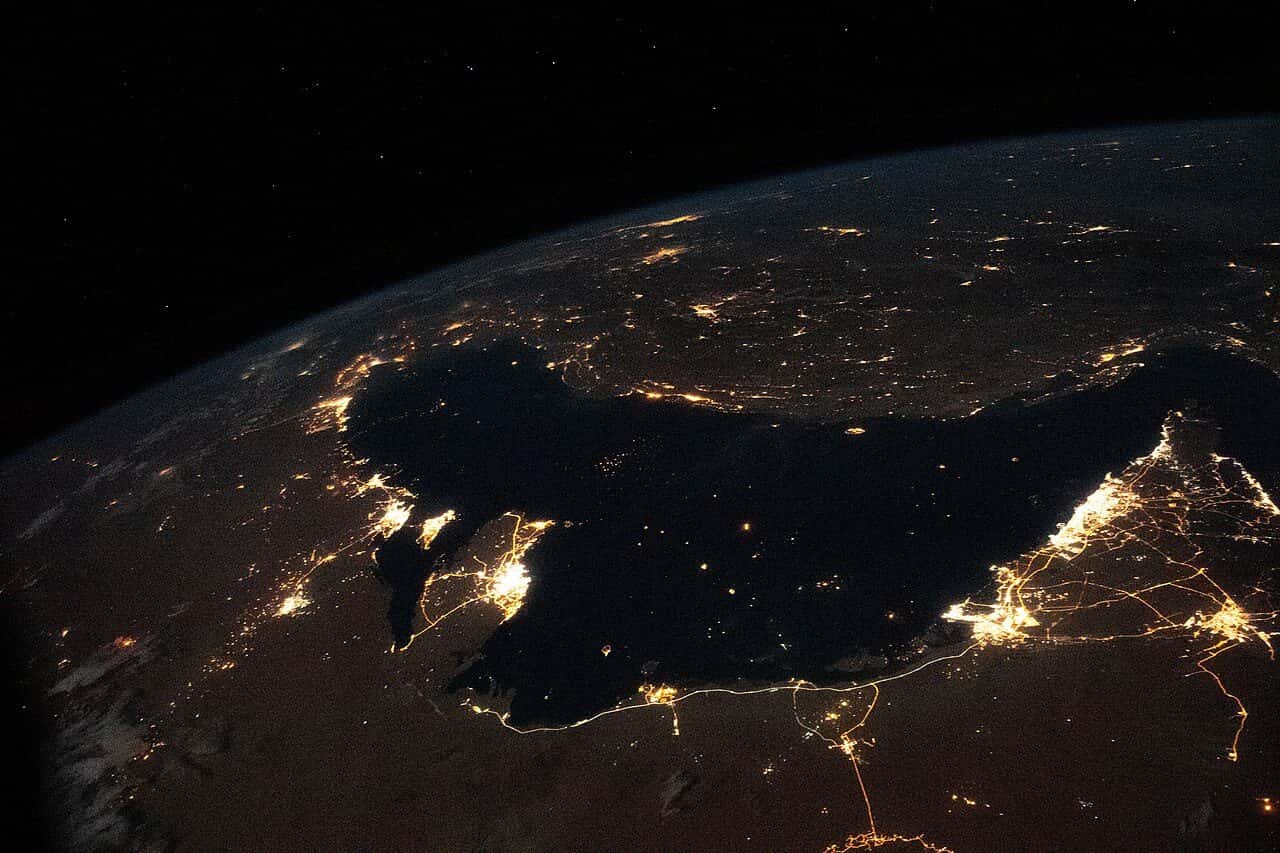 File photo · The Persian Gulf at night, from the International Space Station · Aug 2020 · NASA · Public domain · Source & license
The story
Bloomberg Television reported that the US-Iran war has reached a crisis point for Saudi Arabia, with Houthi forces firing at the kingdom on a near-daily basis during September. The attacks have already pushed Saudi oil production to its lowest level in decades, according to the report, while creating a broader threat to the kingdom’s economic plans.
The immediate change is the shift from regional spillover risk to repeated direct attacks on Saudi territory. Saudi Arabia’s diversification program depends on large-scale investment beyond oil, and Bloomberg said the hostilities could complicate those multi-trillion-dollar plans as security risks and disruption weigh on the economy.
The direct mechanism is two-sided: lower oil production threatens the revenue base that funds the state, while attacks can raise the cost and difficulty of delivering non-oil projects. The report also places Crown Prince Mohammed bin Salman at the center of the exposure because he is the kingdom’s de facto leader and the principal political sponsor of its economic transformation.
The next decisive markers are further attacks, any additional production interruption, and evidence that major diversification projects are delayed or reprioritized. A change in the conflict’s trajectory would determine whether the current shock remains an energy disruption or becomes a broader challenge to Saudi fiscal and investment plans.
Our read · Wed, Sep 16
The escalation is negative for Saudi Arabia’s growth and oil-revenue outlook, with no single listed-company proxy identified.
Why. The implication is a widening sovereign and energy shock: lower production can weaken the funding base for Saudi Arabia’s diversification push while repeated attacks increase execution and security costs.
Both cases
What could change this view: A ceasefire, successful Saudi defenses or restored oil production would quickly reduce the economic risk described here.
Who reported it · 1
Keep reading
Latest on the Wire
Australia’s jobless rate hits 5-year high, markets ramp up rate-cut bets for 2027Trump meets Putin and Xi separately ahead of historic three-way talksHyperscale Data warns of $74.8 million gap for Michigan AI projectAlibaba aided China military-linked lab with AI computing technologyMeta pauses plan to give Zuckerberg new shares without losing controlContinue on the Wire →Latest on the Wire
Fed releases October meeting minutes three weeks after policy decisionAnthropic Said to Guide IPO Pricing Above Market RangeLagarde says she will leave ECB early to counter election misinformationRansomware group The Gentlemen reportedly lists Nvidia for a leakContinue on the Wire →Top this week
Nvidia allies lobby board to bring back Jensen Huang as CEONvidia chair rules out Huang return as CEO after 75% sales outlookNvidia interim CEO Colette Kress faces first earnings test after HuangNvidia CEO Jensen Huang reportedly resigns as US-China tensions riseNvidia CFO Colette Kress to serve as interim CEO after Jensen HuangAbout this report
Reported by Bloomberg Television as Houthi Conflict Threatens Saudi Arabia's Economy
, . Who answers for this
The only report in this record. Closes are licensed end-of-day data from Databento; the move after a story is its first close against the close before it. How this is decided →
Kept as written · your side, if you take one, is graded privately against licensed closes after 10 trading days · nothing here is advice · How the Wire is made →