Treasury accepts 68% of maximum offers in latest buyback operation
The Treasury accepted 68% of the maximum offers in its latest expanded buyback operation as Treasury yields spiked. The result renews questions about demand for the program’s longer-dated purchases and the market’s sensitivity to supply and liquidity signals.
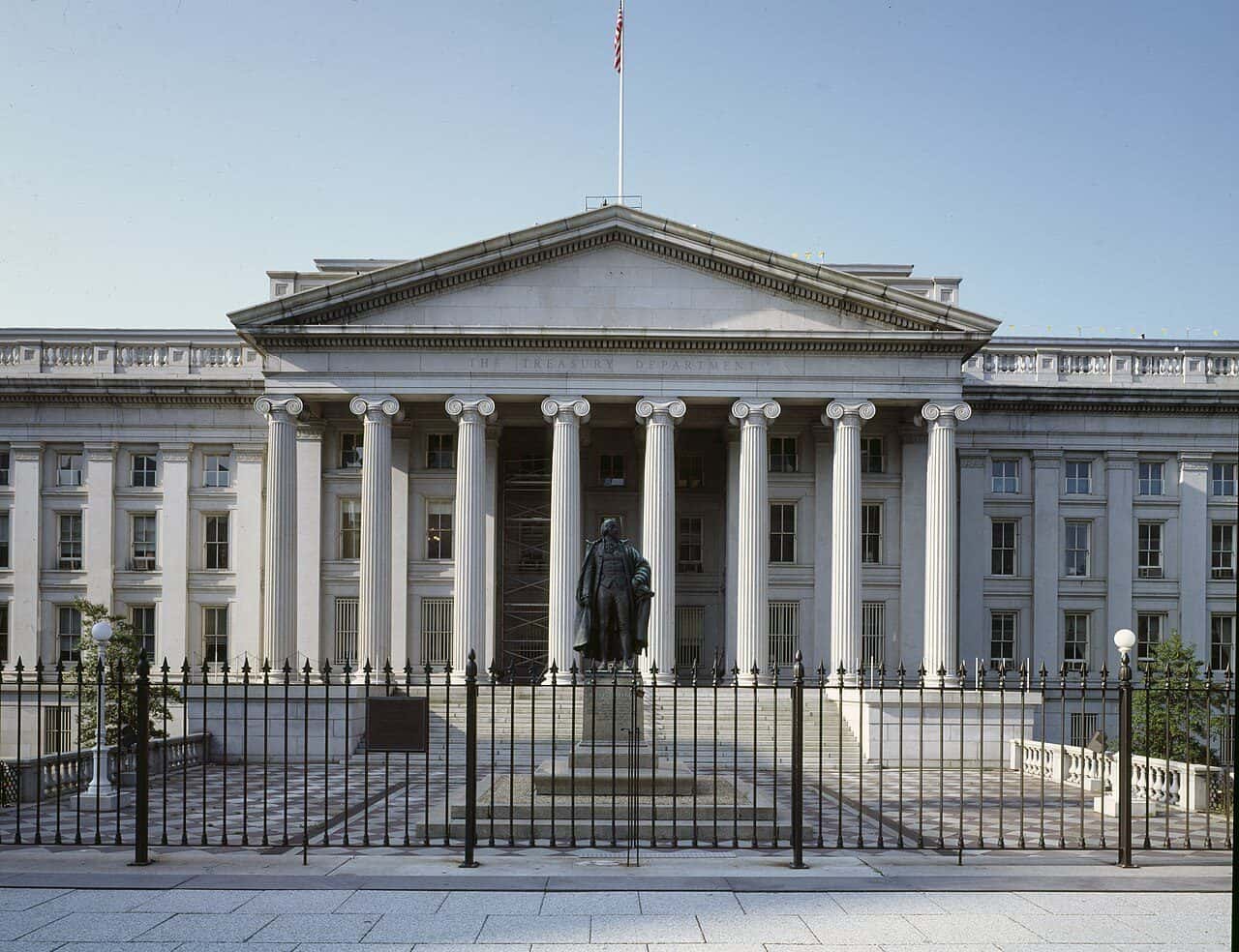 File photo · The US Treasury Building, Washington · date unknown · Carol M. Highsmith / Library of Congress · Public domain · Source & license
The story
The Treasury accepted just 68% of the maximum offers in its latest expanded buyback operation, according to the report, after the operation offered capacity of $6 billion. The result came as Treasury yields spiked, extending a rates-market reaction that has focused attention on the program’s ability to attract sufficient offers.
Two weeks earlier, the first expanded operation had a $6 billion maximum capacity and resulted in $5.187 billion of accepted buyback offers. Treasury yields then reached a three-year high, although they remained below 5%, according to the report.
The program’s demand is being judged against recent longer-dated buyback activity. Bank of America rates strategist Mark Cabana had cited $18.7 billion of offers received across several recent 10-year-to-20-year buybacks ahead of the first expanded operation.
The immediate uncertainty is whether the latest acceptance rate reflects a temporary mismatch between Treasury’s terms and dealer offers or a broader limit on demand for the expanded format. Further operations and the direction of Treasury yields will provide the next evidence on how the market is absorbing the program.
Our read · Thu, Sep 24
The Treasury accepted 68% of its $6 billion buyback capacity as Treasury yields spiked.
Why. The latest acceptance rate makes the next buyback a test of whether the expanded format can consistently draw offers without adding to rates-market strain. The prior operation accepted $5.187 billion against $6 billion of capacity, while recent 10-year-to-20-year buybacks had received $18.7 billion of offers, leaving the evidence mixed rather than directional.
Both cases
What could change this view: A subsequent operation that attracts offers near its maximum capacity would undercut the demand concern; a further yield spike would instead show the market reaction is broadening beyond the buyback mechanics.
Who reported it · 2
Keep reading
Latest on the Wire
Beijing plans to bar young red-chip firms from overseas listingsGerman producer prices jump 8.1% in October as industrial inflation acceleratesChina seeks protections to restart US private-equity investmentsAMD shares fall 11% after Hunterbrook warns over China linksWalmart raises full-year outlook as e-commerce wins shoppersContinue on the Wire →Latest on the Wire
Walmart raises full-year outlook as e-commerce wins shoppersAnthropic IPO could become the largest in US history on ThursdayPIF Tower in Riyadh reportedly damaged in second Houthi attackTrump Media buys back $100 million of notes ahead of Nov. 30 cash demandContinue on the Wire →Top this week
Nvidia allies lobby board to bring back Jensen Huang as CEONvidia chair rules out Huang return as CEO after 75% sales outlookAnthropic Said to Guide IPO Pricing Above Market RangeNvidia interim CEO Colette Kress faces first earnings test after HuangNvidia CEO Jensen Huang reportedly resigns as US-China tensions riseAbout this report
Reported by ZeroHedge as Bessent Plays Hardball With "Bloomberg Bros": Yields Spike As Treasury Accepts Just 68% Of Maximum Buyback Offers
, . Who answers for this
2 reports from 2 publishers in this record. Closes are licensed end-of-day data from Databento; the move after a story is its first close against the close before it. How this is decided →
Kept as written · your side, if you take one, is graded privately against licensed closes after 10 trading days · nothing here is advice · How the Wire is made →