Intel (INTC) and ASML Move High-NA EUV Into Production. Can the Economics Catch Up?
Intel and ASML are moving high-NA EUV lithography into production, but the technology’s economic payoff remains unproven. The setup is strategically important for Intel’s manufacturing ambitions while its weak profitability leaves little room for execution slippage.
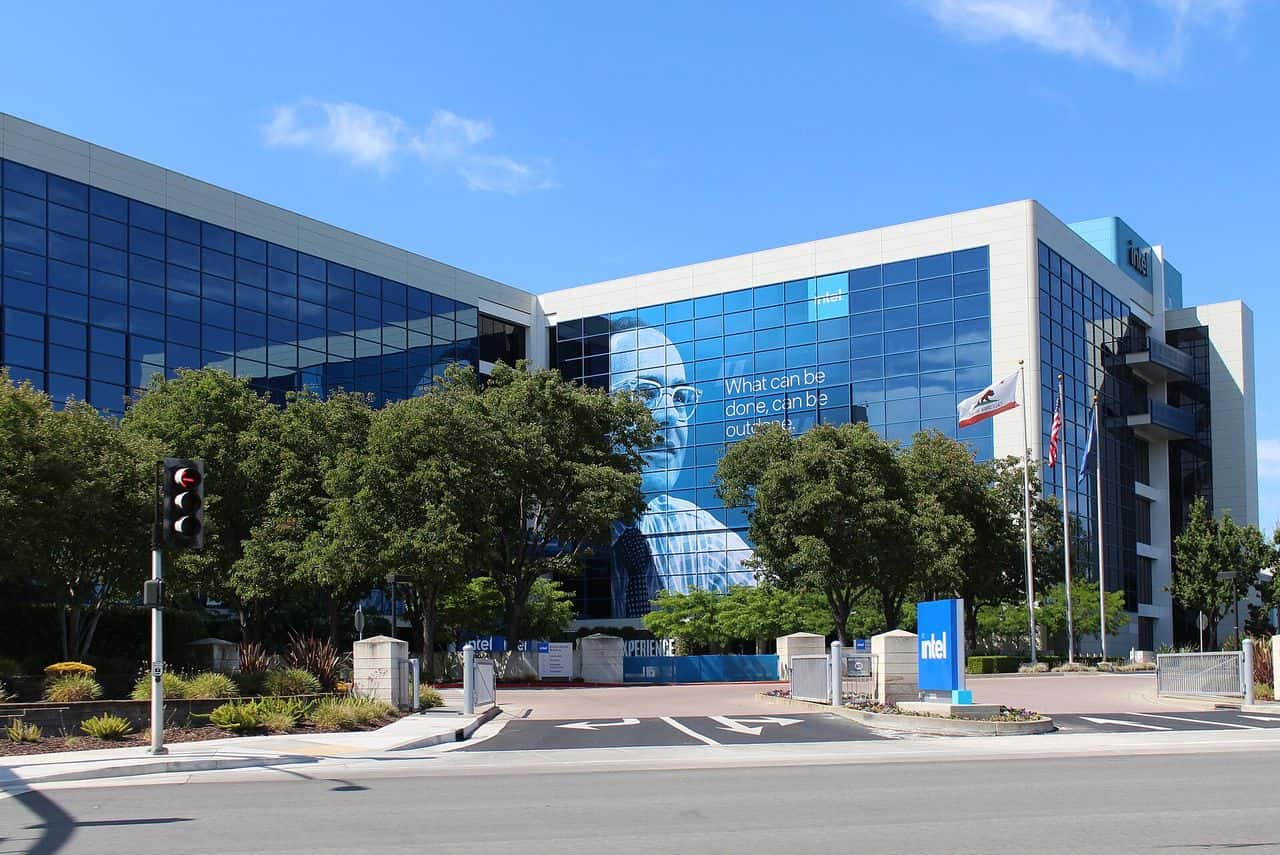 File photo · Intel’s headquarters, Santa Clara · Jul 2023 · Coolcaesar · CC BY-SA 4.0 · Source & license
The story
Intel and ASML are advancing high-NA extreme ultraviolet lithography from development toward production use. The technology is intended to support more advanced chipmaking, but the question centers on whether the resulting manufacturing benefits can justify the substantial equipment and process costs.
That question matters against Intel's latest financial position: fiscal 2025 revenue was $52.9 billion, down 0.5% year over year, while gross margin was 34.8% and net margin was negative 0.5%. The move into production therefore arrives while Intel is still working from a low-profitability position rather than funding the transition from a strong earnings cushion.
For Intel, high-NA EUV could affect manufacturing competitiveness and the economics of its foundry strategy if it improves process density, yield or time to market. ASML is the equipment supplier tied directly to the production rollout, while Intel is the semiconductor manufacturer that must absorb the capital and operating costs before any benefit appears in revenue or margins.
Key metrics to watch include how much of Intel's current economics will change as high-NA EUV moves beyond deployment. The next useful evidence would be Intel's next earnings update and disclosures on process milestones, capital spending, yields and foundry demand. For ASML, orders, shipment timing and customer adoption would help determine whether high-NA EUV is becoming a meaningful commercial cycle rather than primarily a technology milestone.
Our read · Wed, Sep 9
High-NA EUV strengthens Intel’s manufacturing option value, but the economics remain a margin and capital-allocation risk for INTC; ASML is the clearer equipment beneficiary.
Why. The implication for Intel is a capital-efficiency test: high-NA EUV can support its manufacturing ambitions, but the company enters the rollout with fiscal 2025 revenue down 0.5% year over year, a 34.8% gross margin and a negative 0.5% net margin. Without disclosed production economics, yields or customer commitments, the technology milestone is not enough to establish a directional equity edge; the next earnings update should show whether deployment is translating into measurable manufacturing progress.
Both cases
What could change this view: The read fails if Intel discloses strong high-NA EUV yields, customer demand or foundry economics that demonstrate a faster payoff than the report currently establishes.
Who reported it · 1
Since this story · the companies named here, equal weight · −32.0%
Price context does not establish that the story caused the move.
Related by name
Keep reading
More on INTC
Intel shares slide 22% as weaker PC outlook pressures turnaroundASML lifts 2026 sales floor to €44 billion on AI equipment demandMusk hints TSMC may help build Terafab as Intel shares fallS&P 500 futures rise as markets await the Fed’s rate decisionSK Hynix, Intel shares rise on report of U.S. memory chip production plansLatest on the Wire
Trump threatens overseas AI data-centre ban for US firmsBitcoin drops below $59,000 as cash rush revives summer-low testGreer says US chip curbs will close China export-control loopholesBlackRock bitcoin ETF posts $541.1 million outflow as tech sell-off spreadsPoland says Russian missiles and drone crashed during Ukraine assaultContinue on the Wire →Latest on the Wire
Poland says Russian missiles and drone crashed during Ukraine assaultAnthropic debut fails to halt technology-led slide in US stocksBeijing plans to bar young red-chip firms from overseas listingsGerman producer prices jump 8.1% in October as industrial inflation acceleratesContinue on the Wire →Top this week
Nvidia allies lobby board to bring back Jensen Huang as CEONvidia chair rules out Huang return as CEO after 75% sales outlookAnthropic Said to Guide IPO Pricing Above Market RangeNvidia interim CEO Colette Kress faces first earnings test after HuangAnthropic IPO could become the largest in US history on ThursdayAbout this report
Reported by Yahoo Finance, . Who answers for this
The only report in this record. Closes are licensed end-of-day data from Databento; the move after a story is its first close against the close before it. How this is decided →
Kept as written · your side, if you take one, is graded privately against licensed closes after 10 trading days · nothing here is advice · How the Wire is made →